

The Authority in Global Agricultural Chemistry & Bio-Resources
Natural Food Coloring Wholesale: How to Compare Source, Stability, and MOQ
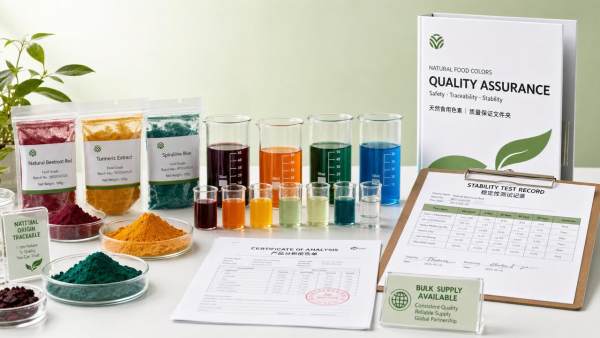
Natural Food Coloring Wholesale Starts With Better Questions
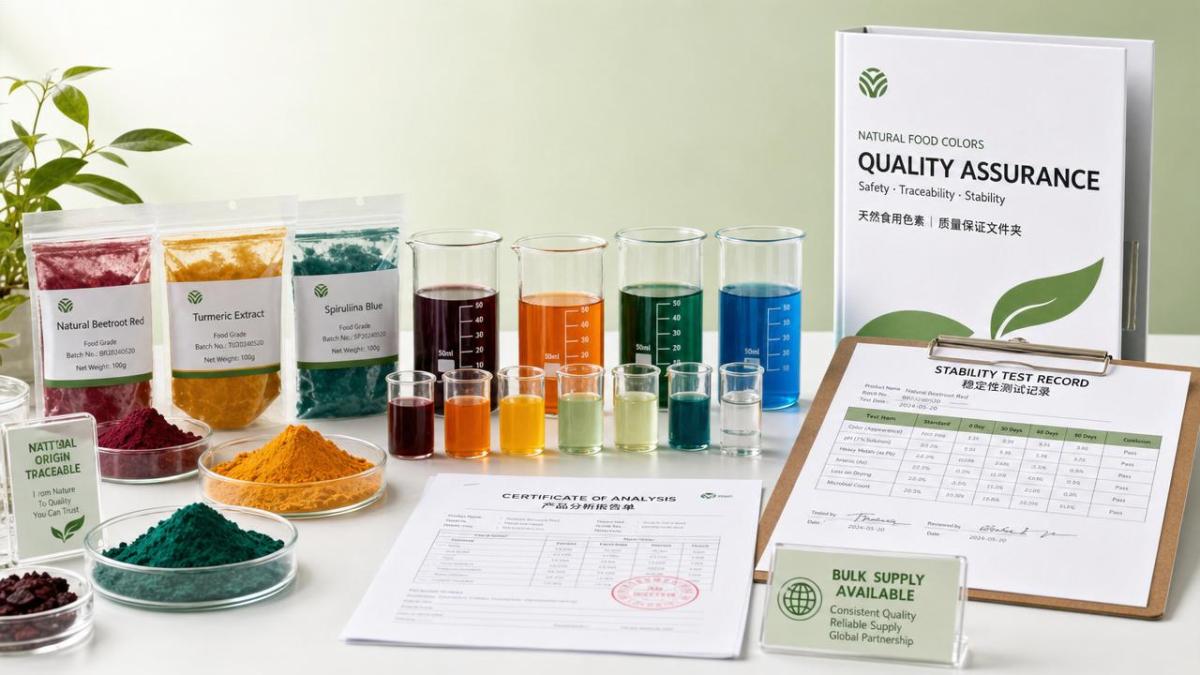
Natural food coloring wholesale decisions rarely fail on price alone. More often, problems appear later through shade drift, weak documentation, or impractical order volumes.
That is why source, stability, and MOQ deserve to be compared together. Looking at one factor without the others usually creates hidden cost.
In practical sourcing, a low quote can lose value if the pigment fades in heat, reacts in acid, or arrives with inconsistent crop origin records.
For sectors tracked closely by AgriChem Chronicle, traceability and technical validation matter because ingredient supply chains now face tighter quality and compliance expectations.
So what should be checked first when reviewing natural food coloring wholesale suppliers? The short answer is raw material origin, process suitability, and workable commercial terms.
What does “source” really mean in natural food coloring wholesale?
Source is not just the plant name on a specification sheet. It includes geography, harvest season, extraction method, and how the supplier controls batch variation.
A beet-derived red and a paprika-derived orange may both sound straightforward. In reality, field conditions and processing choices can change final performance significantly.
When comparing natural food coloring wholesale offers, ask whether the color comes from concentrates, oleoresins, powders, or water-dispersible preparations.
That detail affects solubility, application range, and shelf stability. It also helps explain why two similar quotations may perform very differently in production.
Reliable source review usually includes these checkpoints:
- Botanical or biological origin with clear naming
- Country of origin and harvest consistency
- Extraction solvent or processing route
- Carrier system, concentration, and standardization method
- Documentation for allergens, contaminants, and regulatory status
If the supplier cannot explain these points clearly, the natural food coloring wholesale program may become harder to scale with confidence.
How do you judge color stability before a bulk order?
This is where many sourcing mistakes happen. A sample can look excellent in a neutral beverage and fail completely in baked, acidic, or high-light applications.
Natural pigments respond differently to pH, oxygen, heat, metal ions, and shear. Anthocyanins, chlorophylls, curcumin, spirulina, and carotenoids all behave differently.
Instead of asking whether a color is stable in general, ask whether it is stable in the exact process and storage profile involved.
A useful review table can narrow that comparison quickly:
In actual use, pilot testing matters more than brochure claims. A strong natural food coloring wholesale partner should support application-specific trials, not generic promises.
MOQ sounds simple, so why does it affect cost so much?
MOQ is often treated as a basic commercial term, but it has operational consequences. An attractive unit price can become expensive if the minimum order exceeds real consumption.
With natural food coloring wholesale, MOQ also connects to shelf life, color retention, and reformulation risk. Large inventories can become obsolete if a formula changes.
There is another layer. Some suppliers quote a low MOQ for one shade, but require higher combined volumes for custom standardization, packaging, or blended systems.
A better way to review MOQ is to compare it against three internal realities:
- Monthly usage under normal production
- Shelf life after opening and during storage
- Flexibility needed for seasonal or trial products
If MOQ, lead time, and shelf life do not align, the natural food coloring wholesale arrangement may look efficient on paper but remain weak in practice.
Is it better to compare suppliers by sample color, paperwork, or process support?
The honest answer is all three, but not with equal weight. Visual matching is important, yet it should not dominate the decision.
A sample that matches today but lacks reproducibility can create more trouble than a slightly adjusted shade backed by strong controls and transparent data.
When reviewing natural food coloring wholesale candidates, process support often reveals the real quality level. Useful support includes formulation notes, dosage guidance, and batch-to-batch control ranges.
Paperwork matters for a similar reason. Well-prepared suppliers usually provide specification sheets, COA formats, microbiological data, heavy metal limits, and regulatory declarations without delay.
This is especially relevant in supply chains followed by ACC, where technical credibility and compliance transparency increasingly shape long-term sourcing decisions.
A practical comparison framework looks like this:
- Sample match shows visual potential
- Documents show control discipline
- Application support shows partnership quality
- Response speed shows execution reliability
If only one of these is strong, caution is justified.
What mistakes are common when sourcing natural food coloring wholesale?
One common mistake is assuming “natural” means universally acceptable across all formulations. Natural colors often need tighter process matching than synthetic alternatives.
Another mistake is comparing prices on different concentration bases. A lower price per kilogram means little if tint strength is significantly weaker.
Some buyers also overlook freight and storage effects. Temperature-sensitive materials may need controlled logistics, which changes the landed cost calculation.
Then there is the documentation gap. Missing origin records, incomplete compliance files, or vague batch coding can slow audits and create avoidable commercial risk.
It helps to keep a short warning list during supplier review:
- Price quoted without strength standardization
- Claims of broad stability without test conditions
- MOQ disconnected from shelf life
- Slow response on regulatory or quality files
- No clear explanation of raw material origin
These issues do not always disqualify a supplier, but they signal where deeper verification is needed before placing larger orders.
How should the final decision be made without overcomplicating it?
The simplest approach is to score each natural food coloring wholesale option against the same operational criteria, then review trade-offs openly.
Start with the intended application. A beverage, confectionery item, bakery mix, feed-related ingredient, or nutraceutical format will not need the same stability profile.
Next, match source transparency to compliance expectations. In regulated and globally traded sectors, traceability is not a bonus. It is part of risk control.
Then compare MOQ and lead time against realistic inventory planning. This protects working capital and reduces write-off risk.
A sensible closing checklist includes source records, application test data, concentration basis, storage guidance, MOQ flexibility, and batch consistency history.
Natural food coloring wholesale works best when the technical and commercial sides are reviewed together. That is usually where stronger sourcing decisions begin.
For the next step, build a side-by-side comparison sheet, request application-specific stability evidence, and verify whether MOQ truly fits expected usage rather than headline price.
Related Intelligence
- Natural IngredientsFreeze-Dried Fruit Ingredients: A Packaging Checklist for Bulk StorageBuying freeze dried fruit ingredients? Use this bulk packaging checklist to assess moisture barriers, seals, and pack sizes, reduce waste, and protect quality from storage to production.
- Natural IngredientsBotanical Ingredient Prices in Europe: Comparing Quotes by Grade and Order VolumeCompare Europe botanical ingredients price quotes by grade and order volume. Discover how potency, testing, delivery, and inventory costs reveal real savings before you buy.
- Natural IngredientsMayonnaise vs. Salad Dressing: Ingredient and Texture DifferencesMayonnaise vs. salad dressing: discover key ingredient, texture, stability, and application differences to choose the right product for every recipe.
The Morning Broadsheet
Daily chemical briefings, market shifts, and peer-reviewed summaries delivered to your terminal.
