

The Authority in Global Agricultural Chemistry & Bio-Resources
How to Choose a Commercial Spice Grinder for Capacity, Grind Size, and Heat Control
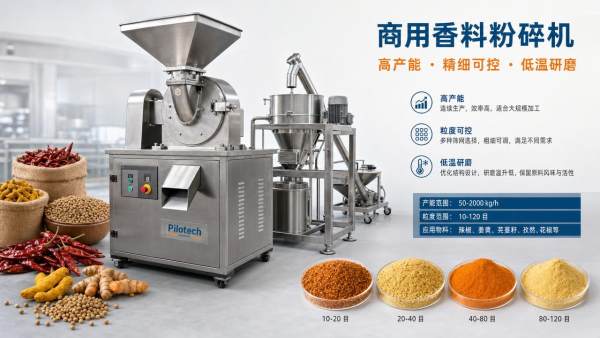
Choosing a commercial spice grinder is rarely a simple equipment purchase. It shapes hourly output, particle uniformity, aroma retention, cleaning time, and total operating cost across food, botanical, feed, and extract processing lines.
For operations handling spices, seeds, herbs, or functional ingredients, three variables usually decide whether a machine performs well in practice: capacity, grind size control, and heat control. Those factors influence not only production targets, but also product integrity and compliance expectations.
That is why the topic sits naturally within the wider coverage of AgriChem Chronicle, where machinery selection, raw material quality, and processing discipline often intersect. In regulated and margin-sensitive supply chains, grinding is not a minor step. It is a control point.
Why grinder selection matters beyond simple throughput
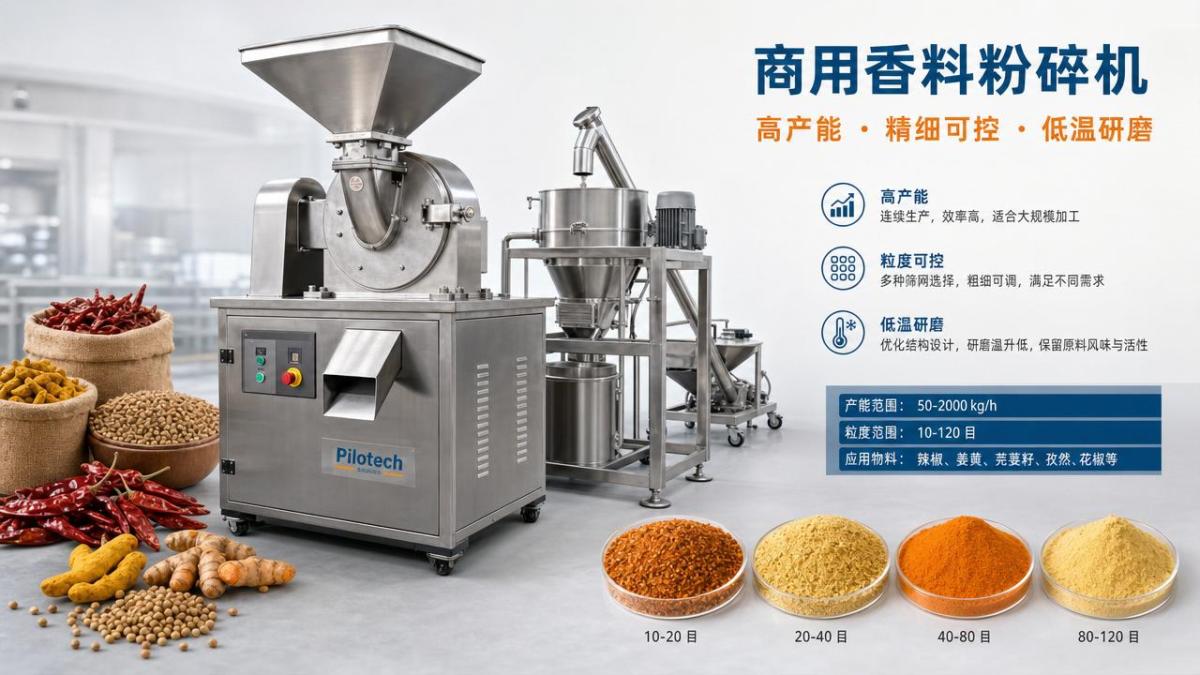
A commercial spice grinder reduces whole spices or coarse material into a defined particle range for blending, extraction, seasoning, or downstream formulation. On paper, many machines appear similar. In production, their differences become expensive.
A grinder that pushes volume but overheats product can damage essential oils. A machine that delivers a fine average grind but wide particle variation can disrupt mixing behavior and packaging consistency.
In sectors linked to feed and grain processing, bio-extracts, and ingredient manufacturing, particle control affects yield and flowability. In some applications, it can also influence extraction efficiency, dissolution, and microbial risk during storage.
This is why equipment evaluation should move beyond motor power alone. The better question is whether the commercial spice grinder can process the target material consistently under real operating conditions.
Start with material profile, not machine catalog claims
Capacity, fineness, and heat generation all depend on the raw material. Dry chili, coriander, turmeric, cinnamon bark, dehydrated garlic, and seed blends do not fracture in the same way.
Before comparing models, define the product profile clearly. That includes moisture level, oil content, fibrous character, hardness, incoming particle size, and acceptable temperature rise during milling.
A commercial spice grinder handling high-oil spices may clog or smear if the cutting action is too aggressive. Fibrous botanicals may bridge in the feeder or produce inconsistent output unless rotor speed and screen design are matched carefully.
Usually, the most reliable procurement decisions begin with a sample test protocol. Supplier brochures describe theoretical performance. Trial data shows how the machine behaves with the actual material mix.
How to assess capacity without overbuying or underbuying
Capacity should be measured as usable output per hour at the required particle size, not maximum output under ideal conditions. The stated figure on a datasheet may drop sharply when finer grinding is required.
This is especially important when one commercial spice grinder must support multiple SKUs. Throughput changes with screen size, feed rate, spice density, and cleaning frequency between batches.
Questions that reveal realistic capacity
- What output is achieved on the same spice category at the same target fineness?
- Is the rated capacity based on continuous operation or short test runs?
- How often must the machine pause for cooling, cleaning, or screen changes?
- What is the feed method, and can it maintain stable loading?
- How does performance change when oil-rich or heat-sensitive materials are processed?
A slightly larger unit is not always the safer option. Oversized systems can increase energy waste, floor space demands, and part replacement cost, especially when actual batches are modest and product changeovers are frequent.
The practical target is a capacity band with headroom, rather than a single maximum number. That headroom helps absorb seasonal demand, variable raw material behavior, and future product additions.
Grind size control is really about consistency
When people discuss grind size, they often focus only on whether the result is coarse or fine. In procurement terms, the more valuable metric is distribution consistency from batch to batch.
A commercial spice grinder with poor control may create excessive fines, uneven texture, or dust loss. That affects blending accuracy, filling performance, visual appearance, and end-use behavior in seasoning or extraction systems.
For some formulations, a narrower particle distribution improves ingredient dispersion. For others, a controlled coarse fraction is needed to preserve texture or infusion characteristics. The right specification depends on the process that follows grinding.
Request sieve analysis data where possible. A commercial spice grinder that can document repeatable particle results is easier to validate than one described only by visual fineness.
Heat control protects volatile compounds and process stability
Heat is often the most underestimated selection factor. Grinding creates friction, and friction can strip aroma, darken color, promote caking, and reduce the value of high-volatility materials.
For spices rich in essential oils, temperature rise directly affects sensory quality. For botanical and specialty ingredient lines, excess heat can compromise extraction behavior or shorten shelf stability.
What to review in heat management
- Grinding mechanism and friction profile.
- Residence time of material inside the chamber.
- Airflow design and dust extraction balance.
- Cooling jacket, chilled air, or cryogenic support if needed.
- Actual product exit temperature during trial runs.
Not every line requires advanced cooling. Yet for premium spices, extracts, and sensitive nutraceutical ingredients, a commercial spice grinder with credible heat control may protect far more value than its added purchase price suggests.
Machine type, hygiene, and compliance should stay in the same conversation
Selection decisions also depend on how the grinder fits into a broader processing environment. Hammer mills, pin mills, turbo mills, and impact grinders each offer different trade-offs in fineness, speed, and temperature behavior.
At the same time, construction quality matters. Contact parts should match the hygiene and corrosion demands of the material. Access for cleaning should be practical, not just technically possible.
In supply chains shaped by GMP, FDA, or comparable standards, documentation can be as important as hardware. Material certificates, surface finish details, maintenance records, and traceability support smoother qualification.
For facilities crossing between food, feed, and fine ingredient applications, that documentation helps reduce risk when audits, customer reviews, or export requirements become more demanding.
A practical comparison framework for final selection
The best comparison process combines technical fit with lifecycle realism. A low initial quote can become expensive if wear parts fail quickly, cleaning is slow, or product losses rise due to heat and fines.
When comparing a commercial spice grinder shortlist, build the decision around measurable criteria:
- Verified throughput at the required particle range.
- Temperature rise on sensitive materials.
- Particle distribution repeatability.
- Ease of sanitation and batch changeover.
- Wear part availability and service response.
- Documentation quality and supplier transparency.
A site visit or witnessed trial often clarifies more than a long specification sheet. It reveals vibration levels, operator access, discharge behavior, and how honestly the supplier discusses material limitations.
Where to go next with the evaluation
A strong commercial spice grinder decision usually begins with a structured requirement sheet. List the materials, target hourly output, acceptable particle distribution, maximum temperature rise, cleaning expectations, and documentation needs.
From there, compare equipment using trial evidence rather than headline claims. In markets where ingredient quality and supply chain scrutiny continue to rise, the most dependable choice is the one that performs consistently under the exact process conditions that matter.
That approach creates a clearer path for technical review, supplier comparison, and future scaling. It also turns the purchase of a commercial spice grinder from a basic machinery decision into a more resilient process investment.
Related Intelligence
- Milling MachineryChanging Hammer Mill Screens: Particle Size Control and DowntimeIs it easy to change the screen or adjust the output size of the hammer mill? Discover practical tips for smoother screen changes, consistent particle size, and less downtime.
- Milling MachineryChanging Hammer Mill Screens: Particle Size Control and DowntimeIs it easy to change the screen or adjust the output size of the hammer mill? Discover practical tips for smoother screen changes, consistent particle size, and less downtime.
- Milling MachineryHow Should Milling Machinery Be Maintained to Extend Its Service Life?Learn how to maintain processing machinery to extend service life with practical milling maintenance tips on cleaning, lubrication, and wear checks to reduce downtime.
The Morning Broadsheet
Daily chemical briefings, market shifts, and peer-reviewed summaries delivered to your terminal.
