

The Authority in Global Agricultural Chemistry & Bio-Resources
Agricultural Chemicals Safety Protocols: PPE, Storage Rules, and Spill Response Steps
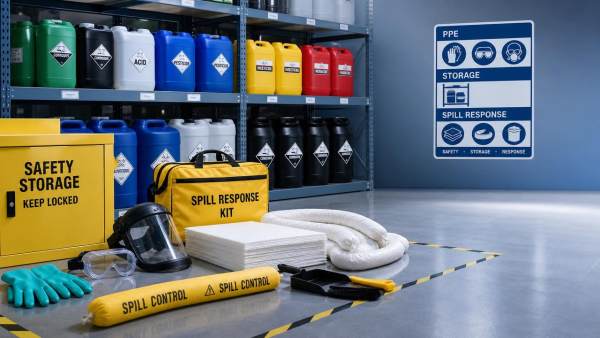
Why are Agricultural Chemicals safety protocols getting stricter?
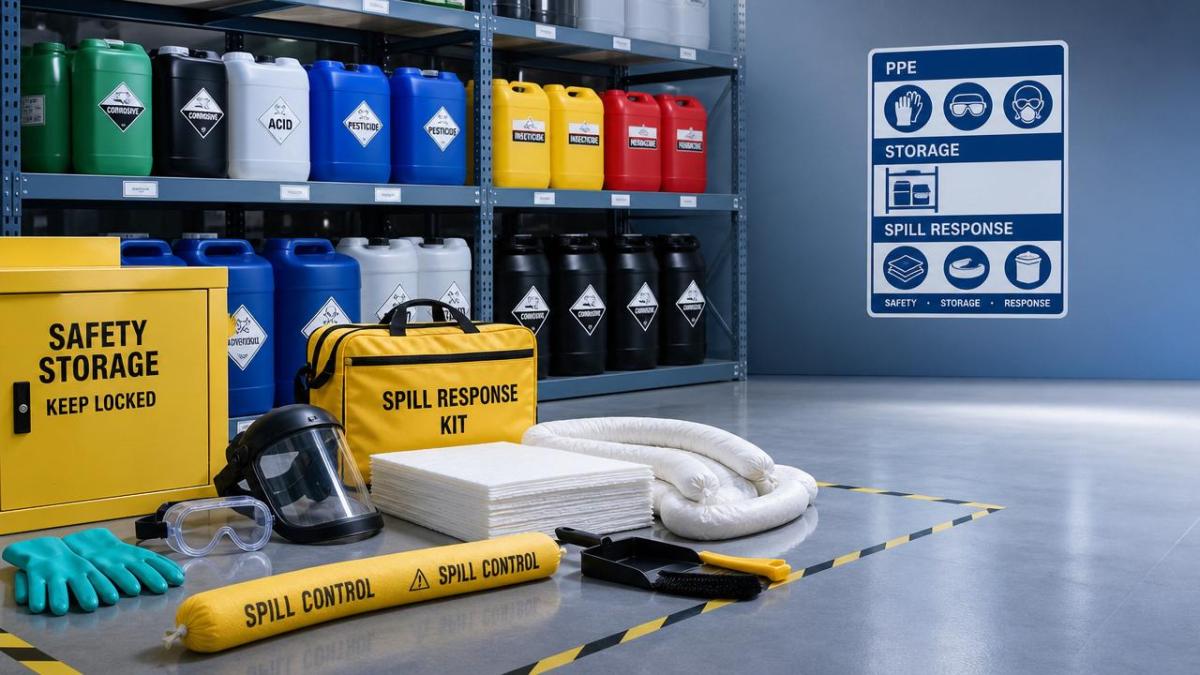
Agricultural Chemicals safety protocols now sit at the center of operational control, not at the edge of compliance paperwork.
That shift is easy to understand. Chemical inventories are broader, labels are more detailed, and inspections expect documented procedures instead of informal habits.
In practical terms, weak handling rules can trigger worker exposure, cross-contamination, damaged stock, failed audits, and environmental reporting problems.
The issue also reaches beyond farms. Fine chemicals, feed processing, bio-extract handling, and equipment maintenance all depend on disciplined chemical control.
That broader view reflects the kind of cross-sector intelligence often emphasized by AgriChem Chronicle, where agricultural practice, chemical precision, and regulatory scrutiny increasingly overlap.
So when people search for Agricultural Chemicals safety protocols, they are usually asking a larger question: what system actually prevents incidents before they start?
What does a strong chemical safety system include beyond basic PPE?
A reliable program is built in layers. PPE matters, but it is only one barrier in a larger control structure.
A complete framework usually connects risk identification, storage zoning, label integrity, spill readiness, ventilation, training records, and waste segregation.
More importantly, each layer should support the next one. If labels are unclear, even the best protective gear will not prevent mixing mistakes.
The same is true for spill response. A written procedure looks fine on paper, but it fails quickly if absorbents, neutralizers, and disposal containers are missing.
The table below gives a practical way to judge whether Agricultural Chemicals safety protocols are operational or only administrative.
This kind of review helps separate formal policy from real readiness, which is where many failures begin.
Which PPE choices actually reduce risk during mixing, transfer, and cleanup?
The best PPE decision starts with exposure route, not with habit. Splash, vapor, dust, and skin contact create different protection needs.
For liquid concentrates, chemical-resistant gloves, goggles, face shields, coveralls, and boots are often more important than a simple dust mask.
For powders or volatile products, respiratory protection becomes more critical, especially in enclosed mixing rooms or transfer points.
One frequent mistake is choosing PPE by price or convenience alone. Agricultural Chemicals safety protocols fail when comfort overrides compatibility data.
Need to check three things before approving PPE:
- Whether glove and suit materials resist the exact formulation, not just the active ingredient.
- Whether the task involves extended contact, overhead pouring, or pressurized spraying.
- Whether decontamination and replacement rules are defined after each use.
In actual operations, reusable PPE often creates hidden risk when cleaning steps are vague or drying areas are poorly controlled.
That is why many safety reviews now compare not only purchase cost, but also replacement frequency, laundering control, and contamination transfer risk.
How should storage rules change for concentrates, powders, and mixed-use facilities?
Storage rules should follow hazard behavior, not warehouse convenience. Different forms of agricultural chemicals create different failure points.
Liquid concentrates need secondary containment, temperature awareness, and shelf layouts that prevent impact or puncture during movement.
Powders raise a different concern. Dust spread, moisture entry, and accidental mixing become more likely when containers are frequently opened.
Mixed-use sites face an added challenge because crop chemicals may sit near lubricants, sanitation agents, feed additives, or fine chemical intermediates.
That is where Agricultural Chemicals safety protocols need stronger segregation logic. Shared buildings do not justify shared storage conditions.
A practical storage review usually includes these points:
- Keep incompatible materials physically separated, with clear signage and access limits.
- Store chemicals away from direct sun, ignition sources, drains, and food or feed contact zones.
- Use first-expiry review, not just first-in-first-out, when stability periods differ.
- Inspect caps, seals, pallets, and bund areas on a routine schedule.
A well-run storage area should make the wrong action feel difficult. If anyone can grab, open, decant, and move stock without checks, the system is too loose.
When a spill happens, what response steps matter in the first few minutes?
Speed matters, but sequence matters more. Rushing in without control can enlarge the exposed area and increase personal contact.
Most effective Agricultural Chemicals safety protocols follow a simple early-response logic: identify, isolate, protect, contain, report, and dispose.
First, confirm what spilled. Container label, SDS details, and approximate quantity shape every next step.
Next, secure the zone. Stop traffic, block drains if safe, and keep unprotected personnel away from vapors or splash paths.
Then use the correct PPE before touching anything. Cleanup without proper protection is one of the most repeated incident patterns.
Containment tools should match the spill type. Absorbent pads, inert granules, booms, and neutralizing agents are not interchangeable.
After containment, waste handling becomes the next control point. Collected residue, contaminated PPE, and wash materials may all require regulated disposal.
A short response checklist helps keep pressure from turning into confusion:
- Verify product identity and hazard category.
- Stop the source only if it is safe.
- Protect drains, waterways, and adjacent stock.
- Document quantity, location, response actions, and disposal route.
The documentation piece is often underestimated, yet it is essential for audit trails, corrective action, and trend analysis.
What are the most common mistakes that weaken Agricultural Chemicals safety protocols?
The biggest problems are usually ordinary ones. A protocol rarely fails because nobody wrote one. It fails because daily practice drifted away from it.
One common error is treating all chemical risks as equal. Herbicides, disinfectants, solvents, and extraction agents do not behave the same way.
Another is relying on initial training only. Procedures change, labels update, and substitute products introduce new hazards.
A third weakness appears in transfer operations. Secondary containers without complete labels create confusion during use, storage, and emergency response.
There is also a planning gap in many facilities: spill kits exist, but nobody checks whether the contents fit the chemicals on site.
In broader industrial environments, this matters even more because agricultural chemical handling may intersect with API support materials, bio-based ingredients, or maintenance fluids.
The stronger approach is to review incidents, near misses, inventory changes, and storage maps together instead of as separate documents.
How can safety teams turn these rules into a workable routine?
The most durable Agricultural Chemicals safety protocols are simple enough to follow, but detailed enough to verify.
A useful starting point is to map every chemical task by location: receiving, storage, decanting, mixing, application support, cleanup, and waste hold areas.
Then compare each task against three questions: what exposure is possible, what control is required, and what evidence proves the control is working?
That method keeps safety from becoming a binder exercise. It turns policy into a visible operating standard.
It also aligns with the wider compliance mindset seen across regulated primary industries, where traceability, technical accuracy, and response readiness now carry equal weight.
If the current system feels fragmented, start with one review cycle:
- Audit PPE against actual formulations and tasks.
- Recheck storage by compatibility, not habit.
- Test spill response timing with a realistic drill.
- Update labels, SDS access, and disposal records.
That kind of focused review often reveals where risk is concentrated and where operational discipline needs to be rebuilt.
In the end, strong Agricultural Chemicals safety protocols do more than satisfy inspections. They protect people, preserve product integrity, and reduce avoidable disruption.
The next sensible step is to benchmark current procedures against real tasks, actual chemical classes, and likely spill scenarios, then close the gaps one control at a time.
Related Intelligence
- AgrochemicalsUSDA Announces Over $500 Million for Eight Fertilizer Production ProjectsUSDA announces over $500 million for eight fertilizer production projects. Explore how expanded domestic supply could affect farm costs and agricultural supply chains.
- AgrochemicalsAgrochemicals Category Intelligence: Tracking Cost Drivers and Supply RiskExplore agrochemicals category intelligence to track cost drivers, uncover supply risks, and strengthen sourcing decisions. Learn how to negotiate smarter and secure reliable supply.
- AgrochemicalsChina’s Phosphate Fertilizer Exports Near Zero, Tightening Global SupplyChina’s phosphate fertilizer exports near zero in 2026 as sulfur shortages tighten global supply. Explore the risks for importers, prices and sourcing strategies.
The Morning Broadsheet
Daily chemical briefings, market shifts, and peer-reviewed summaries delivered to your terminal.
