

The Authority in Global Agricultural Chemistry & Bio-Resources
Bioprocessing Equipment Investment Costs: Budgeting Beyond Purchase Price
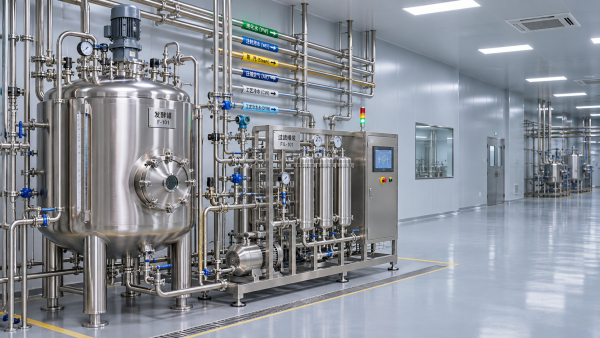
The bio processing equipment investment cost includes every expense required to turn a purchase order into reliable production capacity. A quoted vessel or filtration skid can represent only part of that commitment: utility upgrades, installation, automation, testing, documentation, consumables, and downtime all affect the final budget. The relevant comparison is the cost of producing the required output over an agreed operating period, with the same process and compliance assumptions applied to each option.
Start by defining the intended duty: batch size, annual throughput, product characteristics, cleaning method, and required operating availability. A fermenter sized for nominal vessel volume, for example, does not necessarily deliver that volume as usable product. Working volume, cycle time, cleaning, and harvest losses determine the capacity that generates revenue.
Build the budget around the complete equipment scope
A quotation can cover a standalone machine, a complete skid, or something in between. Before comparing prices, identify what sits inside each supplier’s boundary and what must be purchased separately. A lower equipment price has little meaning if pumps, instruments, control panels, or documentation are excluded.
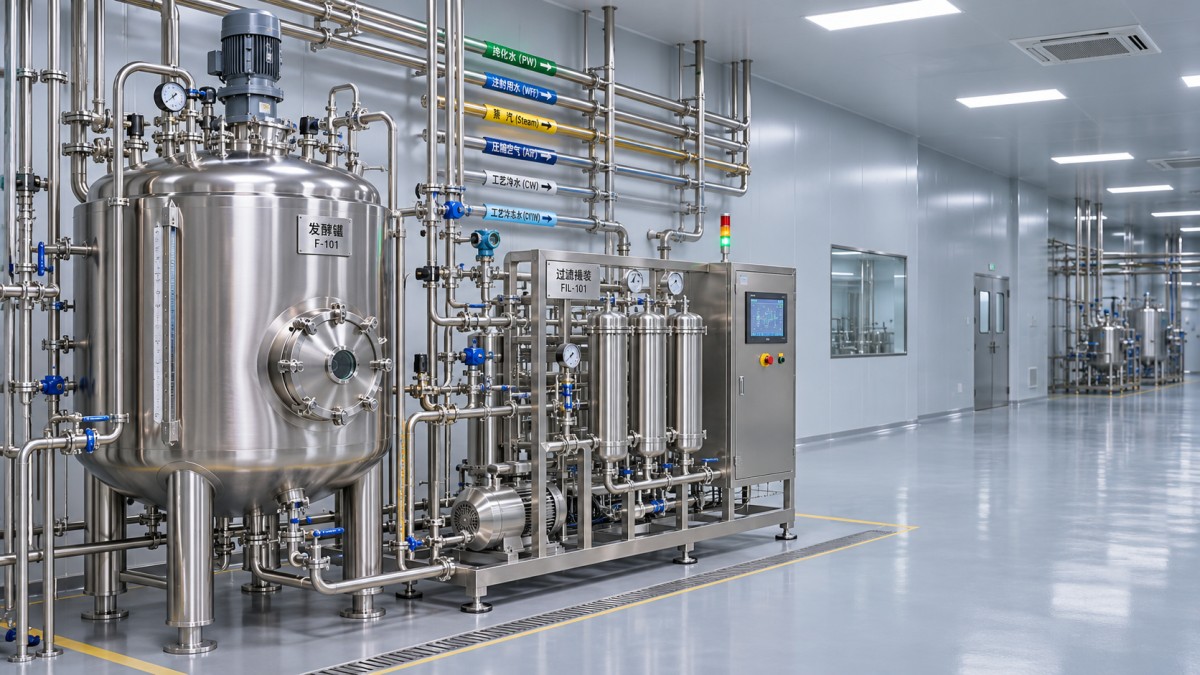
Freight, insurance, customs charges where applicable, unloading, and on-site storage also belong in the project estimate. Their allocation should be explicit in the commercial terms. A delivery price that ends at the factory gate leaves a different financial exposure from one that includes delivery and unloading at the installation site.
Facility modifications and utility demand
Physical fit is a frequent source of late changes. Equipment must pass through doors and corridors, clear ceiling obstructions, and leave room for maintenance. A vessel that fits in its operating position can still require roof access for agitator removal or a temporary opening for installation. Confirm rigging routes and service clearances before finalizing the layout.
Utility budgets should be based on simultaneous peak demand as well as annual consumption. Steam for sterilization, chilled water for cooling, compressed air for actuated valves, and electrical power for drives can overlap during a production cycle. A site with adequate average capacity can still need a larger distribution line, additional cooling capacity, or a revised electrical supply to handle that peak.
Record the required pressure, temperature, flow rate, and quality at the connection point. Steam quality and condensate removal affect heating performance; cooling-water inlet temperature affects the time needed to remove heat. If the supplier specifies an output at conditions the facility cannot maintain, the apparent shortfall can be caused by the utility system rather than the equipment itself. Conversely, a large utility connection does not prove that the process will reach its target cycle time.
Waste handling deserves the same scrutiny. Cleaning solutions, spent media, filter residues, and solvent-containing streams can require collection, segregation, treatment, or off-site disposal. The cost depends on the actual stream composition and local requirements. Include sampling and characterization where the waste profile is not yet established.
Materials, hygienic design, and process fit
Product contact surfaces influence both the purchase price and the cost of cleaning, maintenance, and documentation. Stainless steel grade, elastomer compatibility, surface finish, weld quality, and drainability should follow the process fluids and cleaning chemistry. A material that tolerates the product during processing can still degrade under repeated exposure to cleaning agents or elevated temperatures.
For bio-extracts, assess solvent compatibility across seals, hoses, gaskets, and instrument components, alongside electrical and ventilation requirements for the proposed installation. In pharmaceutical applications, the required level of material traceability and surface documentation should be established against the intended use and applicable quality system. The same vessel design can carry different documentation and verification costs in different applications.
Single-use assemblies and reusable equipment shift spending between capital and operating budgets. Reusable vessels generally require cleaning infrastructure, cleaning verification, and maintenance of permanent product-contact surfaces. Single-use systems require recurring assemblies, storage space, disposal arrangements, and attention to supply continuity. Compare them at the planned batch frequency: an infrequently used unit and a continuously scheduled line can produce very different cost outcomes.
Installation, commissioning, and validation
Installation costs extend beyond setting the skid in place. Pipework must connect at the agreed tie-in points, instruments need calibration, electrical circuits need testing, and control signals must communicate with facility systems where required. Assign responsibility for each interface in the contract and identify who supplies drawings, connection hardware, and access to existing systems.
Factory acceptance testing can expose control or mechanical issues before shipment, while site acceptance testing verifies performance after installation and connection to actual utilities. Define test conditions, acceptance limits, required witnesses, and responsibility for corrective work in advance. A successful factory test does not establish that site utilities, upstream feeds, or downstream equipment will perform as assumed.
Where qualification or validation is required, budget for both supplier documentation and internal work. Design records, material certificates, calibration records, software documentation, installation evidence, and operating procedures must be suitable for the intended use. Documentation gaps discovered after fabrication can require time-consuming reconstruction, additional testing, or component replacement.
Changes after approval also carry indirect costs. Moving a sampling point, replacing a valve, or changing a control sequence can affect drawings, risk assessments, testing, and training. A change-control process with agreed approval and pricing rules makes these consequences visible before work proceeds.
Operating costs that alter the comparison
Use a common production plan to estimate annual expenditure. Include the number of batches, operating hours, cleaning cycles, and expected output per batch. Nameplate capacity alone does not account for setup, cleaning, sterilization, sampling, or changeover. A faster processing step creates limited value if a downstream bottleneck prevents the extra throughput from being used.
- Consumables: filters, membranes, single-use bags, tubing, seals, cleaning chemicals, and calibration materials. Replacement intervals should reflect product fouling, pressure limits, and cleaning effectiveness.
- Utilities: electricity, steam, process water, cooling, compressed air, and any required gases. Include startup, cleaning, and sterilization loads rather than production running time alone.
- Labor: setup, monitoring, sampling, cleaning, maintenance, and batch documentation. Greater automation can reduce repetitive work while adding software support and specialist troubleshooting costs.
- Maintenance and spares: service visits, planned component replacement, calibration, software support, and the inventory needed to restore production after a failure.
- Production losses: rejected material, yield loss, and downtime during repairs or changeovers. Use an agreed financial basis for lost output so that assumptions remain consistent across proposals.
Two filtration systems can have the same stated flow rate but different operating costs. Feed viscosity, solids loading, filter area, and allowable pressure drop affect how quickly flow declines. Frequent filter replacement can indicate fouling from the feed, an unsuitable filter selection, or inadequate upstream clarification; those causes require different remedies and budgets.
Similarly, a longer batch cycle can result from insufficient heating or cooling capacity, slow transfer, control settings, or an upstream scheduling constraint. Isolate the limiting step before assigning the cost to a particular machine. Supplier performance estimates are more useful when they state the feed properties, utility conditions, and operating sequence used to calculate them.
Compare lifetime costs on a consistent basis
Set a common evaluation period and calculate the initial installed cost plus the operating and support costs expected during that period. Include residual value or decommissioning costs where they are material and supportable. For financial comparisons involving different payment schedules, apply the organization’s chosen discount rate consistently to future cash flows.
A practical comparison can be expressed as:
Lifetime cost = installed capital + discounted operating, maintenance, compliance, and downtime costs + discounted end-of-life costs − discounted residual value.
Then relate that amount to the expected quantity of acceptable product over the same period. Use released output rather than theoretical volume when losses and rejected batches are relevant. Do not count the same downtime cost twice by both reducing output and adding lost margin without making the accounting basis explicit.
Test the result against a small number of influential assumptions: production volume, cycle time, consumable life, utility prices, and planned equipment availability. A design with a higher installed cost can become attractive at high utilization if it reduces recurring expenditure; at low utilization, that saving has fewer batches over which to accumulate. Show the conditions under which the ranking changes instead of presenting one forecast as certain.
Contract terms and the cost of delays
The commercial agreement should connect payment milestones to defined deliverables and acceptance criteria. Clarify the scope of engineering, drawings, training, start-up support, warranty coverage, and corrective work. For software-controlled equipment, specify access to backups, licenses, update terms, cybersecurity responsibilities, and the support available if a controller or interface fails.
Schedule risk also has a cost. A late utility connection can prevent site testing even when equipment arrives on time; delayed documentation can hold up qualification after mechanical completion. Map dependencies between facility work, equipment delivery, testing, and release for production. Keep contingency tied to identified uncertainties, with an owner and a basis for each allowance, rather than hiding unresolved scope in a single unexplained figure.
A final comparison should show the quoted price, excluded work, installed cost, annual operating assumptions, and remaining uncertainties side by side. That record makes it easier to distinguish a genuinely lower-cost option from a quotation that simply leaves more work outside its boundary.
Related Intelligence
- APIs & IntermediatesBioprocessing Equipment Investment Costs: Budgeting Beyond Purchase PriceExplore bio processing equipment investment cost beyond purchase price. Budget for installation, utilities, validation, and lifetime expenses with confidence.
- APIs & IntermediatesPlanning for ISO Standards in Aquaculture: Where Should Farms Start?Aquaculture ISO planning starts here: choose the right standard, assess farm risks and build an audit-ready system with practical steps for your team.
- APIs & IntermediatesTraceable Chemical Intermediates: How to Verify Batch History Before PurchaseTraceable chemical intermediates start with a verified batch history. Learn what to check before purchase and reduce sourcing risks.
The Morning Broadsheet
Daily chemical briefings, market shifts, and peer-reviewed summaries delivered to your terminal.