

The Authority in Global Agricultural Chemistry & Bio-Resources
Low-Impurity Custom Chemical Synthesis: How to Evaluate Impurity Control
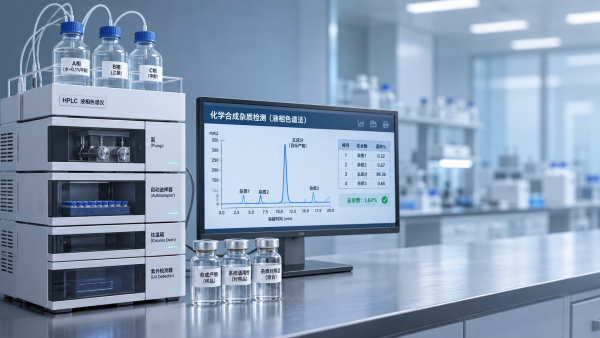
In low impurity custom chemical synthesis, a reported purity percentage alone rarely tells the whole story. Technical evaluators must understand which impurities are present, how they arise, and whether analytical methods can detect them at relevant thresholds. A robust assessment also examines process controls, batch-to-batch consistency, documentation, and the supplier’s ability to meet application-specific requirements. This guide outlines the evidence to review when comparing synthesis partners and identifying impurity risks before they affect downstream performance or compliance.
Why the purity number is only a starting point
Two samples can carry the same stated purity and behave differently in use. One may contain a residual catalyst that interferes with a later reaction; the other may contain a structurally similar byproduct that complicates crystallization or analytical testing. Neither risk is obvious from the headline percentage.
The meaning of purity also depends on how it was measured. A chromatographic area percentage is not automatically equivalent to mass purity: different compounds can produce different detector responses, and water, inorganic salts, or certain residual solvents may not be captured by that method at all. Ask whether the reported result is an assay, a normalized chromatographic area, or a value calculated using a defined mass balance. The distinction matters when comparing quotations or certificates of analysis.
Start with the intended use, not an arbitrary purity target. An intermediate destined for another purification step may tolerate a profile that would be unacceptable in a finished ingredient. Conversely, a low-level impurity may deserve a tight limit if it affects a sensitive downstream reaction, has a toxicological concern, or persists through later processing. The acceptable specification should reflect those risks and the applicable quality framework.
Build an impurity profile around the route
A credible supplier should be able to explain the likely sources of impurities, not just report what appeared in one successful batch. Request a route-specific discussion covering starting materials, reagents, catalysts, solvents, intermediates, side reactions, degradation, and potential contamination from equipment or packaging. The supplier may need to protect proprietary chemistry, but confidentiality should not prevent a useful technical risk review.
The most useful discussion follows the material through the process. Which impurities can enter with a starting material? Which can form during a reaction or work-up? Which are removed by extraction, crystallization, or another purification step? Which might reappear if a solvent source or reaction time changes? This is where a process map becomes more informative than a generic statement that the product is “high purity.”
For example, a metal-catalyzed route raises questions about both residual metal and the fate of catalyst-associated ligands or byproducts. A chiral synthesis may require separate attention to the unwanted enantiomer, which an ordinary achiral chromatographic method may not distinguish. A moisture-sensitive compound may develop a different profile after storage, even if it met its release specification.
Not every suspected impurity needs the same control strategy. Some may be controlled in an incoming material or at an intermediate stage; others need testing in the final product. The supplier should explain the basis for each control and provide evidence that it remains effective under the proposed manufacturing conditions.
Examine what the analytical method can actually see
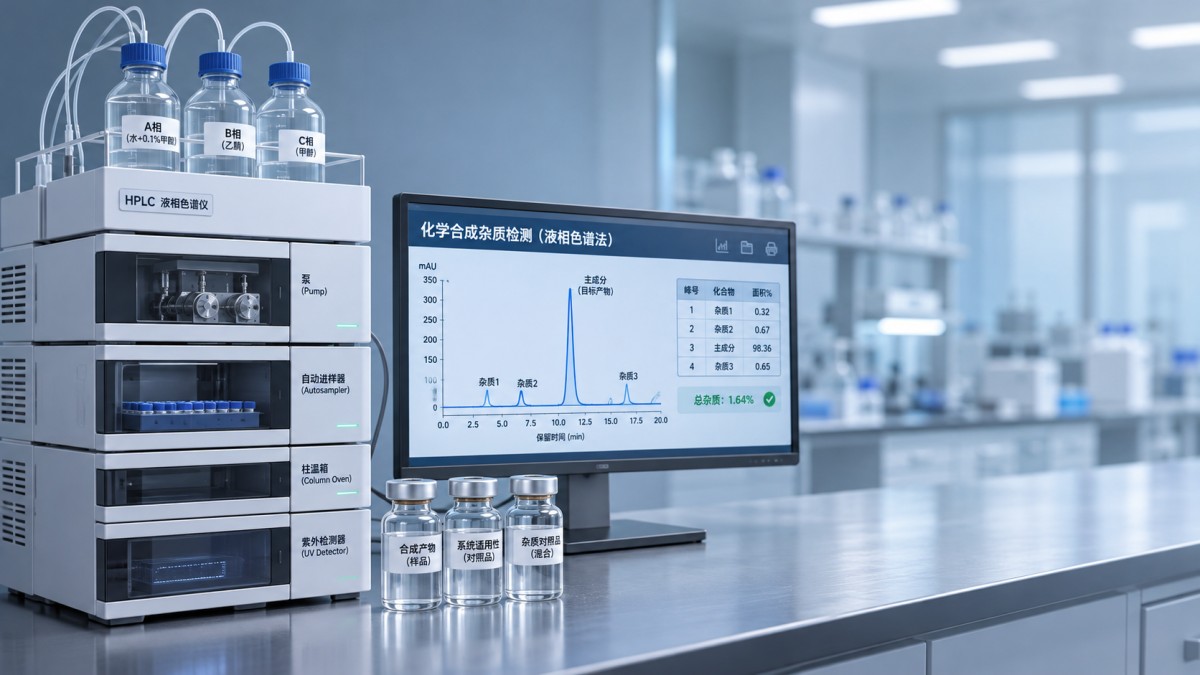
A clean chromatogram is reassuring only when the method is suited to the question. Ask for the method principle, sample preparation, detection technique, reporting convention, and relevant performance data. For critical impurities, the key question is whether the method can detect and, where necessary, quantify them at the agreed limit in the actual sample matrix.
Method suitability should be proportionate to the material and its use. Depending on the project, evidence may include specificity, accuracy, precision, detection and quantitation capability, and stability of the analytical solution. For pharmaceutical work, ICH Q2(R2) provides a framework for analytical procedure validation; its applicability and the necessary level of validation depend on the material, development stage, and relevant regulatory expectations.
Pay particular attention to these practical questions:
- Separation: Can known impurities be distinguished from the main peak and from one another? Co-elution can hide material in an apparently acceptable result.
- Quantitation: Are impurity-specific reference standards or response factors available? If not, how is the result estimated, and what uncertainty does that introduce?
- Coverage: Are residual solvents, elemental impurities, water, counterions, and stereoisomers addressed separately where relevant?
- Unknown peaks: At what level are they reported, investigated, or identified? Are individual unknowns treated differently from total impurities?
- Transfer: Can the receiving laboratory reproduce the method using the available procedure, standards, and system suitability criteria?
Detection and quantitation limits are not interchangeable. A method might indicate that a substance is present without measuring it reliably at the proposed acceptance limit. Similarly, “not detected” means below the method’s detection capability under the stated conditions; it does not establish absolute absence. Ask for that capability before treating a non-detect result as a decision criterion.
If a supplier uses a subcontract laboratory for specialized testing, identify the laboratory’s role and confirm how methods, data review, deviations, and reporting are managed. A supplier remains responsible for an agreed deliverable even when it does not perform every test in-house.
Separate release testing from process control
Final testing provides a snapshot of the batch; it does not by itself explain how consistently the profile was achieved. A stronger assessment looks at controls throughout manufacturing: raw-material acceptance, reaction endpoint, temperature and addition sequence where relevant, hold times, purification conditions, drying, and equipment cleaning.
Ask which parameters have been identified as important to impurity formation or removal, how operating ranges were selected, and what happens when a result falls outside an established range. At an early development stage, the supplier may not yet have extensive operating history. That is not necessarily disqualifying, but the uncertainty should be visible in the development plan rather than concealed behind a final purity target.
Purification deserves particular scrutiny. Recrystallization, chromatography, distillation, and other techniques can reduce impurities, but their effectiveness depends on the compound and process conditions. Ask whether removal has been demonstrated for the impurities that matter, rather than assuming every impurity follows the same pattern as the total chromatographic result. A process that relies on repeated reprocessing to meet specification may introduce yield, capacity, or consistency concerns.
Where shared equipment is used, review the approach to cleaning and cross-contamination. The depth of evidence needed depends on the hazard, intended use, facility design, and applicable quality requirements. A statement that equipment is cleaned is less useful than an explanation of how the cleaning approach is selected, verified, and documented.
Look beyond the development sample
A small sample demonstrates that a route can produce material with a particular profile under particular conditions. It does not prove that the same profile will persist at the intended production scale. Mixing, heat transfer, addition rates, filtration, drying, and hold times can all change as equipment and batch size change.
When comparing partners, ask for batch data relevant to the proposed route and scale, subject to confidentiality. Review individual impurity results and analytical methods alongside overall assay. If only limited data exist, agree on what will be measured during scale-up, what constitutes an unexpected change, and who decides whether further investigation or development is needed.
Supply-chain changes matter too. A new starting-material source, recovered solvent, catalyst grade, manufacturing site, or packaging component can alter the impurity profile. Define which changes require advance notification and technical assessment. For higher-risk materials, a comparability package may be needed before accepting material made after a significant change.
Match documentation to the application
A certificate of analysis should identify the material and batch, list agreed tests and acceptance criteria, and report results using clear units and conventions. But a certificate alone rarely answers every selection question. Depending on the project, request relevant method information, impurity assignments, representative chromatograms, stability or retest rationale, traceability information, and the process for managing deviations and changes.
For APIs and certain pharmaceutical intermediates, ICH Q7 is an important reference for good manufacturing practice, while ICH Q3A, Q3C, Q3D, and M7 may be relevant to the assessment of organic impurities, residual solvents, elemental impurities, and mutagenic impurities respectively. These guidelines do not apply uniformly to every custom chemical or development stage. Confirm their scope, the applicable jurisdiction, and any filing or customer-specific commitments before turning them into purchase requirements.
Agricultural chemicals, bio-extracts, and industrial intermediates can face different product-specific and local requirements. They may also have performance concerns that sit outside a pharmaceutical impurity framework. As AgriChem Chronicle’s coverage of fine chemicals and primary industries suggests, a technically sound evaluation depends on the destination and use of the material, not on importing one sector’s checklist unchanged.
Storage and transport should be part of the same review. Confirm the proposed container, headspace or moisture protection where relevant, storage conditions, sampling arrangements, and the evidence supporting any retest period or shelf life. If degradation is plausible, ask whether the analytical method can distinguish the product from relevant degradants and whether the specification addresses changes over time.
Turn the comparison into an actionable decision
Before selecting a synthesis partner, put the intended use, required quantity, development stage, delivery schedule, and proposed specifications into a shared technical brief. Include known critical impurities, required reporting limits, analytical methods, reference-standard availability, and the documentation expected at release. Where a limit is still uncertain, identify who will generate the data needed to set it.
Then compare suppliers on evidence, not on purity claims alone. A lower quoted price may reflect a narrower test panel, less method development, different packaging, or no provision for investigating an unknown peak. Those differences can be acceptable, but only if they are visible and consistent with the application.
A useful next step is a joint review of one representative batch package against the proposed specification. Resolve any gaps in method sensitivity, impurity identification, scale-up evidence, and change notification before committing to routine supply. That conversation will often reveal more about control of the process than a purity percentage on its own.
Related Intelligence
- Custom SynthesisLow-Impurity Custom Chemical Synthesis: How to Evaluate Impurity ControlLow impurity custom chemical synthesis demands more than a purity claim. Discover how to assess impurity profiles, analytical methods, and supplier controls.
- Custom SynthesisWhat Happens When a Chemical Synthesis Batch Fails QC Testing?Learn what happens if a chemical synthesis batch fails QC testing: explore investigations, reprocessing, and rejection to protect product quality and make smarter sourcing decisions.
- Custom SynthesisWhat drives polymer custom synthesis costs at pilot scale?Explore pilot-scale polymer custom synthesis cost drivers, from reactor time to purification and testing. Learn how to compare quotes and avoid hidden costs.
The Morning Broadsheet
Daily chemical briefings, market shifts, and peer-reviewed summaries delivered to your terminal.