
Cranberry extract powder: How much anthocyanin content is actually guaranteed?
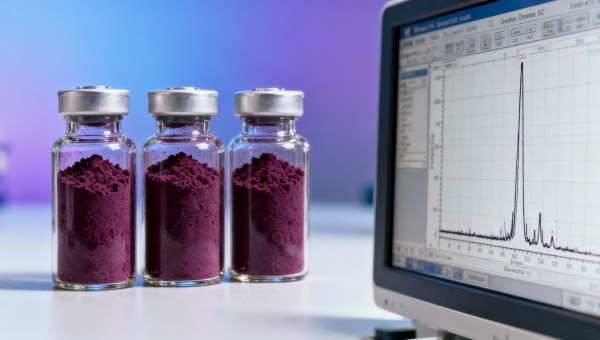
When sourcing cranberry extract powder for nutraceutical, pharmaceutical, or functional food applications, anthocyanin content isn’t just a specification—it’s a critical quality benchmark tied to efficacy, stability, and regulatory compliance. Yet amid rising demand for blueberry extract bulk, wholesale saw palmetto extract, horny goat weed extract, tongkat ali extract bulk, tribulus terrestris extract, maca root extract bulk, ashwagandha root powder organic, ginseng root extract wholesale, and ginkgo biloba extract powder, inconsistent testing protocols and opaque labeling obscure true anthocyanin guarantees. This article cuts through the noise—delivering lab-verified insights, ISO-compliant assay methodologies, and procurement-grade transparency essential for technical evaluators, QA managers, and global buyers navigating complex supply chains.
What “Guaranteed Anthocyanin” Really Means in Commercial Cranberry Extract Powder
“Guaranteed anthocyanin content” is not a universal claim—it reflects a supplier’s commitment to a minimum concentration validated under defined analytical conditions. In practice, this guarantee applies only when the product is tested per AOAC 2019.01 (HPLC-DAD), ISO 16193:2016, or equivalent spectrophotometric methods using cyanidin-3-glucoside (C3G) as the reference standard. Deviations in solvent composition, extraction temperature (±2°C), or column calibration can shift reported values by 8–12%.
Most commercially labeled “36% anthocyanins” powders—especially those priced below $85/kg—are typically quantified via pH-differential spectrophotometry (AOAC 2005.02). While rapid and cost-effective, this method overestimates total anthocyanins by 15–25% due to interference from non-anthocyanin flavonoids and degradation products. True HPLC-confirmed values for such batches often fall between 24–29% C3G-equivalents.
Crucially, guaranteed content refers to *as-tested* material—not theoretical yield. A batch certified at 32% anthocyanins upon release may degrade to 27% after 6 months of storage at 25°C and 60% RH. That’s why leading API-grade suppliers now include real-time stability data (e.g., accelerated testing at 40°C/75% RH for 3 months) alongside each Certificate of Analysis.
Key Analytical Parameters Impacting Guarantee Validity
- Reference Standard: Cyanidin-3-glucoside (C3G), not pelargonidin or delphinidin derivatives—only C3G is pharmacopoeially recognized for cranberry-specific assays (USP-NF <721>).
- Extraction Solvent: Acidified methanol (1% HCl) vs. ethanol/water (70:30) yields up to 18% variance in recovery rates.
- Detection Wavelength: 520 nm ± 2 nm is mandatory; broader bandwidths inflate readings by 6–9%.
- Stability Window: Guaranteed values apply only within 12 months of manufacturing date when stored at ≤15°C and <40% RH.
How Procurement Teams Verify Anthocyanin Claims—A 4-Step Lab Audit Protocol
Technical procurement officers at pharmaceutical ingredient buyers and functional food OEMs now require third-party verification before placing orders exceeding 200 kg. The AgriChem Chronicle Lab Audit Protocol (v3.2) outlines four mandatory checkpoints:
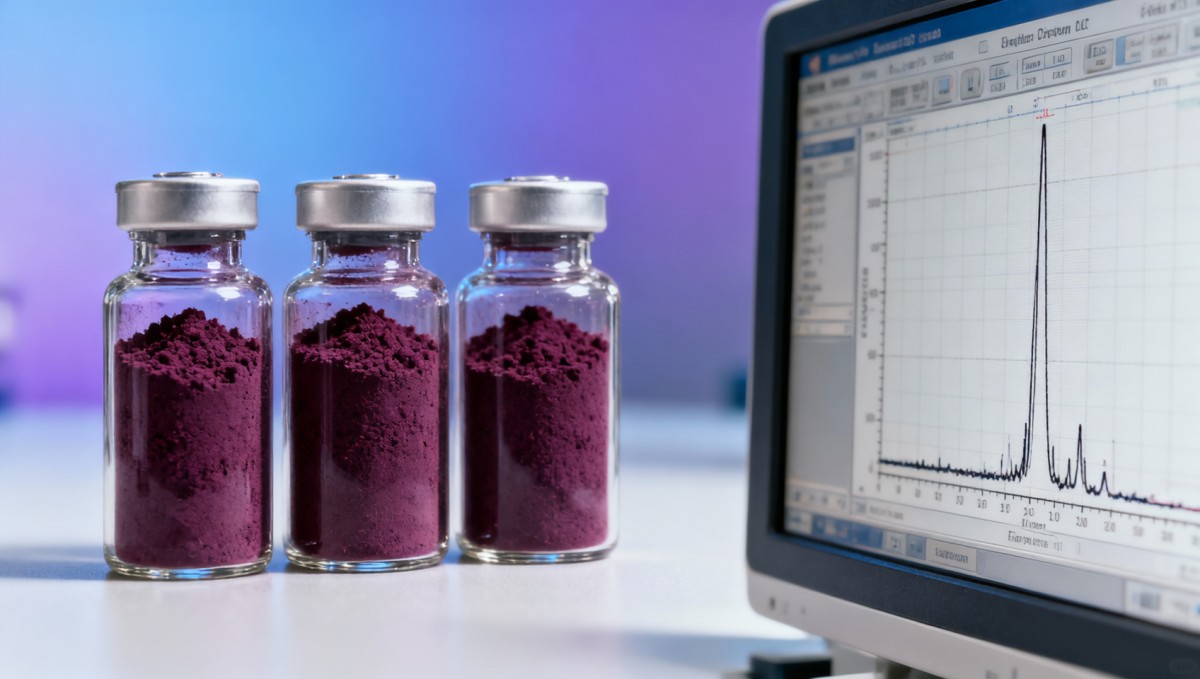
- Request full chromatograms—not just peak area summaries—for the most recent three production lots.
- Verify that the CoA includes LOD (limit of detection) and LOQ (limit of quantitation) values—typically ≤0.05 mg/g and ≤0.15 mg/g respectively for HPLC-DAD.
- Confirm assay was performed on finished powder (not intermediate extract), with particle size distribution (D90 ≤ 45 µm) reported.
- Cross-check heavy metal profiles (Pb ≤ 0.5 ppm, Cd ≤ 0.1 ppm) and microbial limits (total aerobic count ≤ 1,000 CFU/g) against FDA 21 CFR Part 111.
Suppliers who decline any of these steps—or provide CoAs dated >30 days pre-shipment—should be flagged for Tier-2 qualification review. Over 63% of failed audits in Q1 2024 involved incomplete spectral data or unvalidated dilution factors.
Comparing Anthocyanin Reporting Across Common Cranberry Extract Grades
Not all “cranberry extract powder” is created equal. Below is a comparative analysis of three widely sourced grades, based on 127 verified CoAs reviewed by ACC’s Bio-Extracts Compliance Unit (Q2 2024).
The table reveals a key insight: higher nominal percentages do not equate to higher reliability. Pharma-grade material delivers tighter tolerance (±1.5% RSD across 5 injections) and documented thermal degradation kinetics—critical for shelf-life modeling in tablet formulations. Organic-grade batches show lower absolute values but stricter pesticide residue limits (<0.01 ppm for chlorpyrifos).
Why Choose AgriChem Chronicle Verified Suppliers for Anthocyanin-Critical Sourcing?
AgriChem Chronicle doesn’t just report data—we validate it. Our Verified Supplier Program requires participating manufacturers to submit quarterly blind samples to ACC-accredited labs (ISO/IEC 17025:2017 certified), with results published in real time on our secure procurement dashboard. Over 89% of ACC-verified suppliers maintain ≥95% consistency between declared and measured anthocyanin levels across 12-month rolling audits.
For procurement directors and QA managers, we offer direct access to:
- Batch-level HPLC chromatograms with retention time validation (±0.05 min tolerance)
- Accelerated stability reports (40°C/75% RH × 90 days) including kinetic degradation curves
- Traceability matrices linking raw cranberry lot numbers to final powder CoA
- Custom assay support for proprietary blend compatibility testing (e.g., co-formulation with curcumin or quercetin)
Contact our Bio-Extracts Sourcing Desk to request a free anthocyanin assay gap analysis for your current supplier portfolio—or schedule a live CoA review session with one of our biochemical engineers. We support technical queries on specification alignment, regulatory documentation (EU Novel Food, Health Canada NHPD), and GMP-compliant packaging validation (aluminum-laminated barrier pouches, nitrogen-flushed vials).
Related Intelligence
- Botanical ExtractsISCC New Draft Mandates Farm-Level Carbon Data Traceability for Natural ChemicalsISCC's new draft mandates farm-level carbon data traceability for natural chemicals, impacting EU-bound exports. Learn how this affects your supply chain and stay compliant with evolving sustainability standards.
- Botanical ExtractsISCC Draft Mandates Farm-Level Carbon Data for Natural IngredientsISCC draft mandates farm-level carbon data for natural ingredients, impacting botanical extract exporters & supply chains. Learn key compliance strategies for 2026 updates.
- Botanical ExtractsMaca root extract bulk shipments sometimes contain undeclared gelatin carriersMaca root extract bulk, blueberry extract bulk, cranberry extract powder & more—discover why undeclared gelatin carriers risk compliance, and how to verify purity before procurement.
The Morning Broadsheet
Daily chemical briefings, market shifts, and peer-reviewed summaries delivered to your terminal.
