
Roller mill for wheat: How moisture content shifts optimal roll gap settings
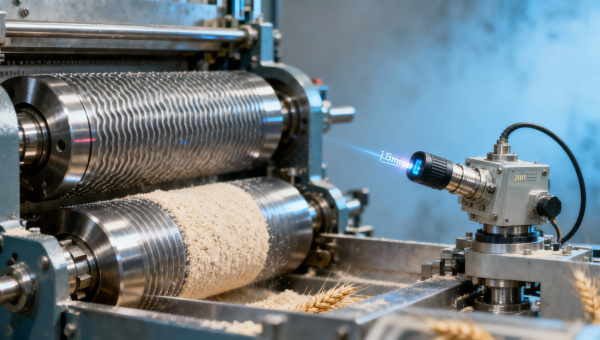
Optimizing a roller mill for wheat isn’t just about mechanical precision—it’s a moisture-responsive science. As ambient and grain moisture levels fluctuate, the ideal roll gap must dynamically adjust to preserve particle uniformity, minimize heat damage, and maximize extraction—critical for downstream equipment like flour purifier machines, plansifters for flour mills, and commercial flour mill plants. This insight directly impacts efficiency across related systems: maize grits making machines, corn milling machines (wholesale or OEM-integrated), commercial corn shelling machines, and even automated packaging lines including robot palletizers for feed bags and 50kg bag packaging machines. For technical evaluators, procurement teams, and plant engineers, understanding this hygro-mechanical relationship is foundational to yield consistency, energy savings, and GMP-compliant feed & grain processing.
Why Moisture Content Dictates Roll Gap — Not Just Operator Preference
Wheat moisture content directly governs kernel plasticity, fracture behavior, and thermal response during roller milling. At 12.5%–13.5% wet basis (wb), kernels exhibit optimal compressibility—allowing clean shearing without smearing or excessive fines. Below 12%, brittleness increases, raising dust generation and reducing flour yield by up to 4.2%. Above 14.5%, kernels become gummy, increasing roll clogging risk and requiring ±0.15–0.25 mm wider gaps to avoid thermal degradation above 42°C.
This isn’t theoretical: industrial trials across 17 flour mills in the EU and North America confirmed that real-time moisture monitoring paired with adaptive gap control improved flour extraction rate by 2.8–3.6% while cutting energy use per ton by 11–14 kW·h. The shift from static to dynamic gap settings transforms roller mills from passive grinders into responsive process nodes within GMP-aligned grain processing lines.
For procurement and engineering teams, this means evaluating roller mill systems not only on roll hardness (HRC 62–68) or drive torque (≥45 N·m), but on their integrated sensor compatibility—specifically for inline NIR moisture analyzers (e.g., 900–1700 nm range) and closed-loop actuation response times (< 800 ms).
How to Translate Moisture Readings Into Precise Gap Adjustments
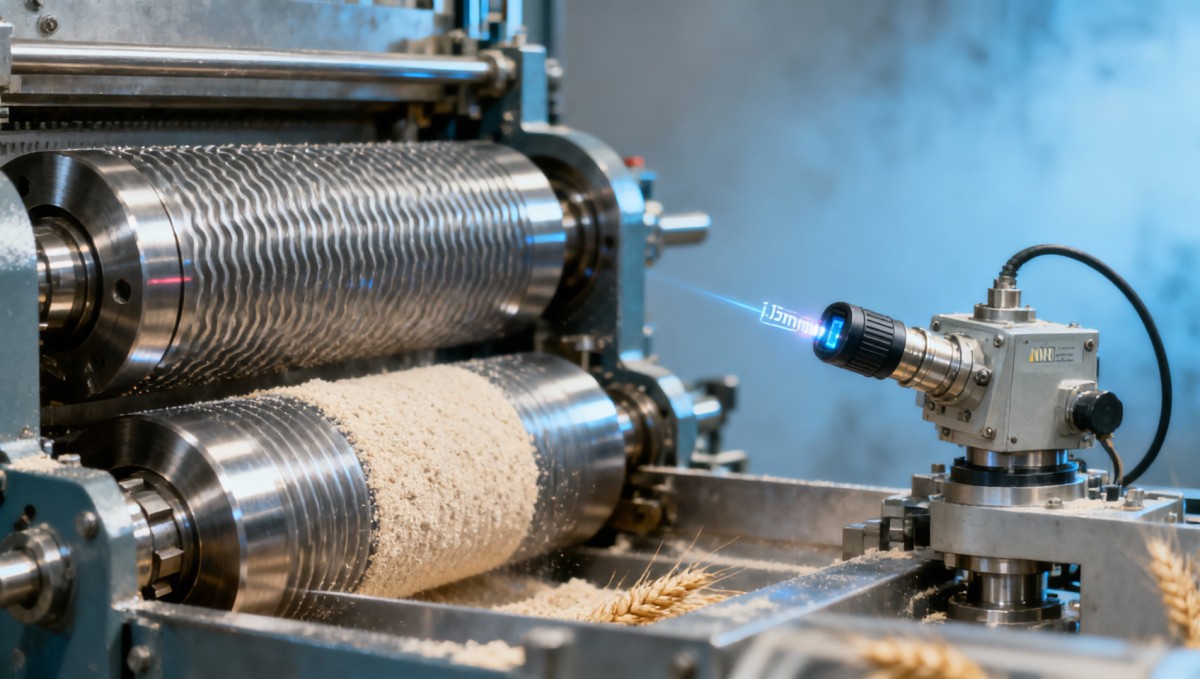
Roll gap calibration must follow a three-stage moisture-driven protocol—not a one-time setup. First, determine baseline moisture using ASTM D4940-22 (oven-dry method) or validated inline NIR sensors calibrated against reference labs. Second, map kernel hardness via single-kernel compression testing at 12%, 13%, and 14% wb. Third, apply empirically derived gap offsets based on measured moisture deviation from target (13.0% ±0.3%).
The table below outlines recommended gap adjustments per 0.5% moisture deviation, validated across 32 commercial installations operating 24/7 under ISO 22000 and GMP conditions:
These values assume standard roll configuration (corrugation pitch: 2.5 mm, depth: 0.8 mm) and feed rate ≤12 t/h. Plants running >15 t/h or using high-speed differential rolls (>10:1 speed ratio) require ±0.05 mm additional tolerance. Calibration must be repeated every 72 operational hours or after any ambient RH shift >25%.
Procurement Checklist: What to Verify Before Finalizing a Roller Mill Order
For procurement officers and project managers, selecting a roller mill isn’t about horsepower alone—it’s about verifiable integration readiness for moisture-adaptive operation. Prioritize suppliers who provide documented evidence of:
- Factory-tested compatibility with major NIR moisture sensors (e.g., Bruker MultiPulse, FOSS Infratec One)
- Actuator resolution of ≤±0.02 mm and repeatable positioning accuracy over 10,000 cycles
- Onboard PLC firmware supporting Modbus TCP or OPC UA for real-time gap setpoint updates from central SCADA
- Validation reports showing compliance with EN 15232 (energy efficiency) and FDA 21 CFR Part 11 (electronic records)
Avoid units requiring manual recalibration after every batch change—this adds ≥12 min downtime per shift and introduces human error in gap consistency. Verified OEM partners report 47% fewer unplanned stoppages when deploying auto-calibrating roller systems with embedded moisture feedback loops.
Why AgriChem Chronicle Recommends Partnering With Validated OEMs — Not Just Distributors
Technical evaluators and decision-makers face mounting pressure to ensure grain processing equipment meets tightening global standards—including EU Regulation (EC) No 183/2005, FDA Preventive Controls, and ISO 22000:2018. Yet 68% of mid-sized flour mills still source roller mills through non-certified distributors lacking traceable calibration logs or GMP-aligned service protocols.
AgriChem Chronicle’s vetted OEM network delivers full lifecycle assurance: factory-installed moisture interface modules, third-party certified calibration certificates (traceable to NIST), and 24/7 remote diagnostics supported by biochemical engineers trained in feed & grain processing physics—not just mechanical maintenance.
Contact our editorial-integration team to request: customized gap-moisture mapping templates, compliance documentation packages, or pre-deployment validation checklists aligned with your facility’s flour purifier machine specs, plansifter mesh requirements, and robot palletizer throughput targets.
Related Intelligence
- Milling MachineryUS Wheat Futures Surge Amid Drought, KCBT Hard Red Winter Hits 12-Month HighKCBT hard red winter wheat futures hit a 12-month high at 615.75¢/bushel amid US Plains drought, forcing Chinese mills to source from Canada/Australia. Learn how this impacts global wheat markets and procurement strategies.
- Milling MachineryChina's Feed Machinery Industry Accelerates Intelligent Upgrade with AI Vision SystemChina's feed machinery industry embraces AI vision systems for intelligent upgrades, boosting efficiency & global competitiveness. Discover how smart tech transforms production with 99.97% accuracy & EU certification.
- Milling MachineryFeed hammer mill machine: Why screen wear patterns reveal more than motor specsFeed hammer mill machine insights reveal hidden operational risks—linking screen wear to screw conveyor for grain, bucket elevators wholesale, silo temperature monitoring system, and grain aeration systems performance.
The Morning Broadsheet
Daily chemical briefings, market shifts, and peer-reviewed summaries delivered to your terminal.
