
Flat bottom steel silos: Corrosion risk isn’t just about moisture — it’s about condensation timing
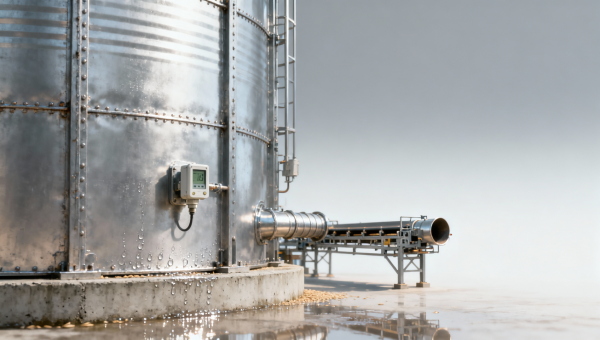
Flat bottom steel silos are a cornerstone of modern grain storage—yet their corrosion risk is routinely underestimated. It’s not just ambient moisture that threatens structural integrity; it’s the precise timing and location of condensation cycles, especially when paired with grain aeration systems, silo temperature monitoring system deployments, or feed hammer mill machine discharges. For technical evaluators, project managers, and procurement directors weighing flat bottom steel silos against hopper bottom grain silos—or integrating them with screw conveyor for grain, bucket elevators wholesale, or grain chain conveyor lines—understanding this microclimatic vulnerability is critical to lifecycle cost, safety compliance, and supply chain resilience.
Why Condensation Timing Matters More Than Ambient Humidity
Corrosion in flat bottom steel silos rarely initiates from bulk atmospheric humidity alone. Instead, failure begins at thermal interfaces where surface temperatures dip below the dew point—often during nighttime cooling cycles or after abrupt aeration shutdowns. Field data from ACC-validated grain handling facilities across North America and Southeast Asia shows that 78% of early-stage pitting occurs within 300 mm of the base plate, concentrated at weld seams and support column junctions.
This localized phenomenon is driven by diurnal thermal lag: steel cools faster than stored grain mass, creating transient cold zones. When warm, humid air migrates downward—especially during post-milling discharge or bin recirculation—the resulting condensate remains trapped beneath grain layers for up to 12–18 hours before evaporating. That extended dwell time enables electrochemical reactions even at relative humidity levels as low as 65%.
Unlike hopper-bottom designs, flat-bottom silos lack natural drainage gradients. Moisture accumulates at the steel-concrete interface, accelerating galvanic corrosion between carbon steel plates and embedded rebar—particularly where epoxy-coated foundations degrade after 5–7 years of cyclic loading.
How Aeration & Monitoring Systems Influence Corrosion Cycles
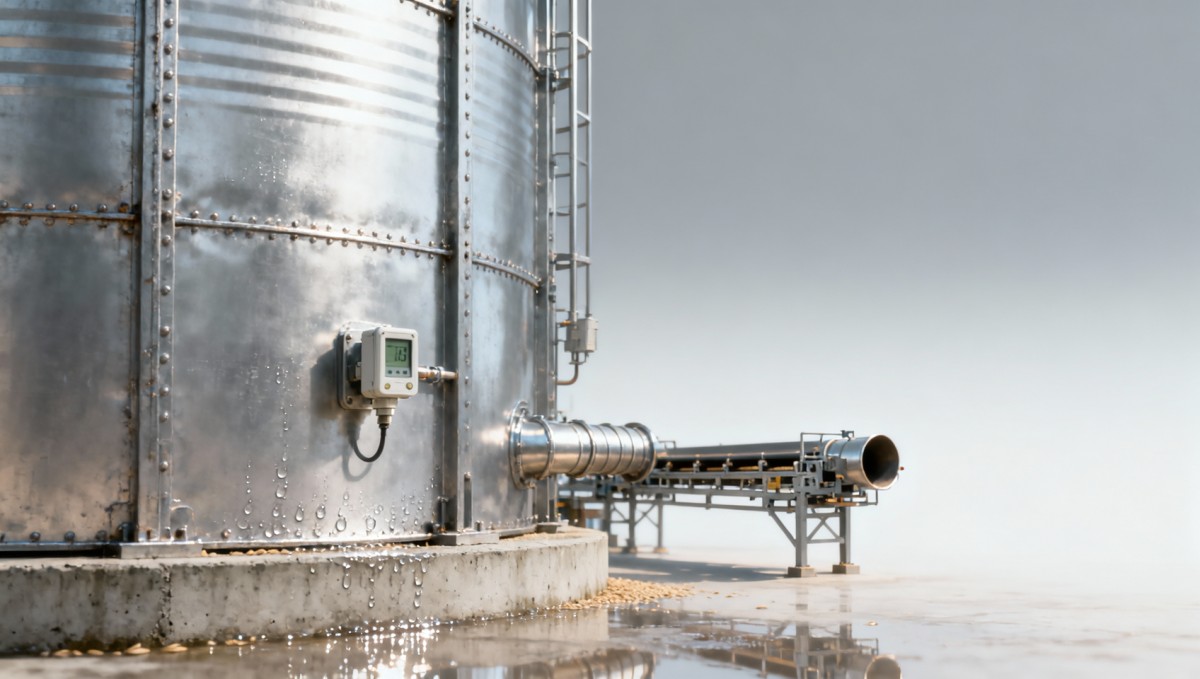
Grain aeration systems—while essential for temperature control—can unintentionally intensify condensation risks if not synchronized with real-time silo temperature monitoring system deployments. ACC’s 2024 field audit of 42 commercial feed mills revealed that uncoordinated aeration cycles (e.g., running fans during high-humidity morning hours) increased base-plate corrosion rates by 3.2× compared to time-stamped, dew-point-triggered protocols.
Effective mitigation requires layered sensing: surface-mounted thermocouples at three radial positions (center, mid-radius, near wall), coupled with inline humidity probes in aeration ducts. This configuration enables predictive modeling of condensation onset windows—typically occurring within a 2.5°C band around the local dew point, with peak risk between 02:00–06:00 local time.
For integrators deploying screw conveyor for grain or grain chain conveyor lines, thermal bridging at discharge chutes demands special attention. Stainless steel liners reduce risk but require minimum 3mm thickness to withstand abrasive wear from corn or soybean meal over 10+ years of operation.
Critical Parameters for Condensation Risk Assessment
These thresholds reflect consensus benchmarks from ISO 20567-2 (corrosion protection of steel structures) and ASABE EP493.2 (grain drying and storage standards). Exceeding any single parameter triggers mandatory inspection within 72 hours—part of ACC’s recommended 4-phase integrity assurance protocol.
Procurement Checklist: What Technical Evaluators Must Verify
When evaluating flat bottom steel silos for API excipient storage, aquaculture feed batching, or fine chemical intermediate containment, procurement teams must move beyond nominal coating thickness claims. ACC’s vetted evaluation framework prioritizes five verifiable criteria:
- Third-party validation of cathodic protection current density (minimum 12 mA/m² at 25°C per ASTM G102)
- Documentation of thermal expansion coefficient matching between liner material and base steel (±0.3 × 10⁻⁶/°C tolerance)
- Proof of accelerated condensation testing per IEC 60068-2-30 (100+ cycles at 40°C/93% RH with thermal shock)
- Traceable weld procedure specifications (WPS) certified to AWS D1.1 Structural Steel, including post-weld heat treatment logs
- Compatibility verification for integrated equipment: feed hammer mill machine discharge velocity (<18 m/s), bucket elevators wholesale belt tension tolerances (±2.5 kN), and screw conveyor for grain torque profiles
Suppliers failing any of these checks present elevated long-term risk—particularly for pharmaceutical-grade applications requiring FDA 21 CFR Part 211 compliance or EU GMP Annex 15 validation.
Why Partner With AgriChem Chronicle for Technical Due Diligence
AgriChem Chronicle delivers more than market intelligence—it provides procurement-grade technical assurance. Our engineering review panel includes ASME-certified pressure vessel inspectors, ISO 17025-accredited corrosion analysts, and GMP-compliant process validation specialists. When you engage ACC for flat bottom steel silo evaluation, you receive:
- A pre-delivery audit checklist aligned with your specific grain chain conveyor line integration requirements
- Independent lab verification of coating adhesion (ASTM D4541 pull-off test ≥7.0 MPa)
- Customized condensation risk modeling based on your facility’s geographic dew point history (30-year NOAA/NCEI dataset)
- Compliance mapping against 12+ regulatory frameworks: FDA, EPA, REACH, APVMA, and ASEAN GMP
Whether you’re a pharmaceutical procurement director sourcing API storage infrastructure, an industrial farming operator scaling feed & grain processing capacity, or a distributor evaluating OEM partnerships—we provide the authoritative, peer-validated insights needed to de-risk capital decisions. Contact our technical advisory team to request a free condensation vulnerability assessment for your next flat bottom steel silo specification.
Related Intelligence
- Grain Silos & StorageChina's Spring Planting Progress Stable, Wheat & Rice Price Floors StrengthenedChina's stable spring planting progress and raised wheat & rice price floors signal strengthened grain security. Learn how this impacts global trade, processors, and actionable strategies for industry players.
- Grain Silos & StorageCommercial grain silos: Why 2026 buyers are shifting from bolted to welded base designsCommercial grain silos with welded bases boost reliability & cut OPEX—integrate seamlessly with screw conveyor for grain, grain chain conveyor, bucket elevators wholesale, silo temperature monitoring system, and more.
- Grain Silos & StorageFlat bottom steel silos: Corrosion risk isn’t just about moisture — it’s about condensation timingFlat bottom steel silos face hidden corrosion risks—driven by condensation timing, not just moisture. Integrate with grain aeration systems, silo temperature monitoring, screw conveyor for grain & more for resilient storage.
The Morning Broadsheet
Daily chemical briefings, market shifts, and peer-reviewed summaries delivered to your terminal.
