

The Authority in Global Agricultural Chemistry & Bio-Resources
Can Agricultural Equipment Be Retrofitted for Precision Agriculture?
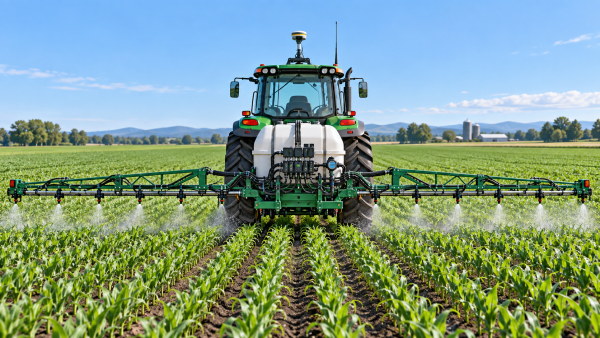
A twelve-year-old tractor may still have a sound engine, dependable hydraulics, and plenty of productive life left. The same can be true of a self-propelled sprayer or combine that was built before connected farming became standard. Yet operators increasingly face a difficult comparison: keep working with familiar machinery, buy a new precision-ready unit, or modernize what is already in the shed.
Can agricultural equipment be retrofitted for precision agriculture? In many cases, yes. Existing tractors, sprayers, planters, spreaders, harvesters, and irrigation systems can be upgraded with guidance displays, GNSS receivers, section control, variable-rate hardware, yield sensors, telematics, and data-management tools. Retrofit is not a universal answer, however. Its value depends on mechanical condition, electronic compatibility, field operations, operator capability, and whether the proposed technology will solve a real management problem rather than simply add another screen to the cab.
For farm businesses balancing input costs, labor constraints, traceability demands, and narrow timing windows, retrofit can be a measured route into precision agriculture. It allows equipment investment to follow operational priorities instead of forcing a complete fleet replacement.
Precision capability is no longer limited to new machinery
Modern precision agriculture is often associated with factory-integrated machinery: tractors with built-in guidance, sprayers with automated boom control, and combines that transmit yield maps in real time. Those systems are valuable, but many core precision functions are available as retrofit packages designed to work across makes, model years, and equipment categories.
The practical question is not whether an older machine can become identical to a newly manufactured precision platform. It usually cannot. The better question is whether it can gain the capabilities required for the job: repeatable steering, accurate application, controlled seed placement, documented fieldwork, or better maintenance visibility.
A retrofit program can range from a relatively simple lightbar guidance system to an integrated package that controls steering, product flow, implement sections, and data transfer. The right level of sophistication is determined by the operation. A broad-acre grain farm may prioritize auto-steer and variable-rate fertiliser application. A vegetable producer may need high-accuracy guidance for bed formation and transplanting. A contractor operating several machines may place telematics, job records, and fleet coordination ahead of field prescription capability.
Where retrofits tend to work best
Some equipment types are naturally better candidates because their tasks are repetitive, their mechanical systems are robust, and precision tools can be added without rebuilding the machine.
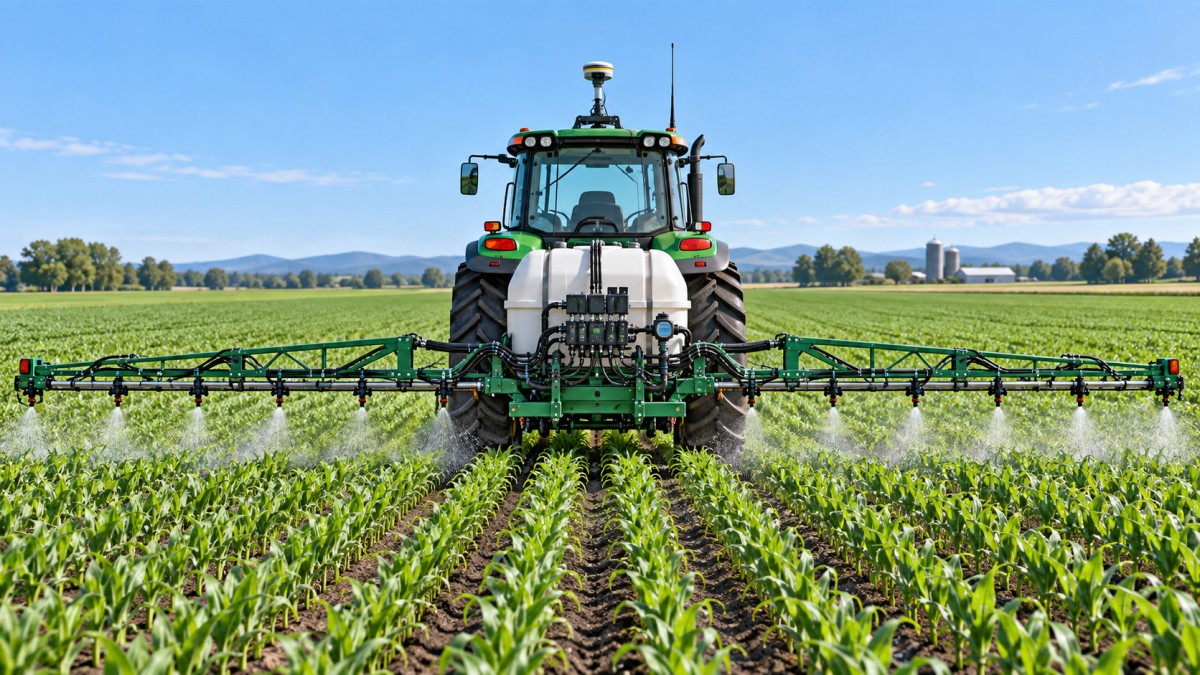
- Tractors: Guidance displays, GNSS receivers, assisted steering, electric steering wheels, hydraulic auto-steer kits, implement control terminals, and telemetry units are common upgrades. Tractors are often the starting point because one investment can support cultivation, drilling, planting, spraying, and hauling operations.
- Sprayers: Boom section control, rate controllers, pressure sensors, flow meters, nozzle monitoring, GPS logging, and automatic shutoff can reduce overlaps and support more consistent applications. Compatibility with pumps, valves, and existing plumbing needs close review.
- Planters and seed drills: Row clutches, electric drives, seed monitoring, downforce sensing, population control, and prescription-based variable rate planting may be retrofitted on suitable frames. The age and condition of metering components remain important; digital control cannot correct worn mechanical parts.
- Fertiliser spreaders and slurry applicators: Variable-rate controllers, weighing systems, section control, flow sensing, and georeferenced application records can improve nutrient placement and support compliance documentation.
- Combines and forage harvesters: Yield monitors, moisture sensors, mapping systems, and telematics can often be fitted, although reliable calibration is more important than merely collecting data.
- Irrigation equipment: Soil-moisture probes, weather stations, remote pump control, flow monitoring, and automated scheduling can add decision-making value even when the irrigation infrastructure itself is older.
The strongest retrofit candidates are machines with a stable service history, adequate hydraulic and electrical capacity, accessible mounting points, and a clear role in the farm’s future operating plan. A machine nearing replacement may still justify a small, transferable guidance investment, but rarely a deeply integrated control conversion.
The compatibility check: the step that prevents expensive disappointment
Retrofitting precision technology is not simply a matter of attaching sensors and loading an app. Agricultural machinery is a mix of mechanical drives, hydraulic circuits, electrical harnesses, control valves, and proprietary communications systems. Older equipment can be highly capable, but its architecture may not easily accept modern automation.
Before purchasing hardware, assess the machine in four layers.
1. Mechanical fitness
Precision control depends on predictable machine behavior. Steering linkage wear, loose wheel bearings, inconsistent hydraulic response, damaged booms, weak seed-meter drives, or uneven tyre pressures will undermine even the best positioning signal. For example, auto-steer may hold a line poorly if front-end components have excessive play. A variable-rate spreader cannot deliver a reliable prescription if its conveyors or gates respond unevenly.
A pre-retrofit inspection should therefore address the machine’s base condition first. In many cases, essential maintenance is part of the precision investment.
2. Electrical capacity and signal quality
Older tractors may have limited alternator output, corroded connectors, unstable voltage, or few suitable locations for protected cable routing. Displays, receivers, controllers, cameras, and modems all need reliable power. Poor grounding can create intermittent faults that are difficult to diagnose during a narrow planting or spraying window.
It is also worth asking whether the equipment can provide usable speed signals, PTO information, implement position data, or hydraulic status feedback. Where native signals are unavailable, independent sensors may be fitted, but that adds installation complexity and calibration requirements.
3. Hydraulic and actuator compatibility
Hydraulic auto-steer systems, rate control valves, electric section clutches, and boom-control components must match the existing system’s pressure, flow, response time, and plumbing design. A retrofit installer should confirm whether open-center, closed-center, or load-sensing hydraulics are involved. This is particularly important when modifying sprayers and application equipment, where incorrect valve selection can affect both accuracy and operational safety.
4. Digital interoperability
ISOBUS has made multi-brand implement communication easier, but not every older machine or implement supports it. Even where connectors are present, the available “implement control” capability may be limited. Proprietary software ecosystems can also affect data export, prescription loading, remote support, and the ability to move information between brands.
Ask direct questions before committing: Can field boundaries and guidance lines be transferred in standard formats? Will application records export to the farm management system? Who owns the machine-generated data? Can the system continue to function if a subscription changes or cellular coverage is weak?
What a retrofit can realistically deliver
Precision agriculture should be viewed as a chain of decisions, not as a collection of devices. A retrofit delivers value when it improves one or more links in that chain: observing field variation, deciding what to do, applying the decision accurately, and recording what happened.
For many operations, the first gains come from guidance and documentation rather than from complex variable-rate programs. Accurate pass-to-pass operation makes later technologies easier to adopt because field boundaries, machine geometry, and operator workflows are already being managed digitally.
Costs are broader than the hardware quotation
Retrofit is often described as the lower-cost alternative to buying new equipment. That can be true, but the comparison should include more than the purchase price of a display or controller. Installation labor, hydraulic modifications, wiring, correction-signal subscriptions, software licenses, data connectivity, calibration time, operator training, and ongoing support all affect the total cost of ownership.
There is also an opportunity cost when systems are poorly selected. A sophisticated rate controller may sit unused if no one has a workable prescription process. A telematics dashboard may produce alerts that no employee has time to review. Conversely, a modest guidance retrofit used on every pass can influence fuel use, labor comfort, timeliness, and input placement across a large portion of the season.
A useful procurement approach is to estimate value by operation rather than by machine. Identify the most costly overlap, the most variable input, the most difficult labor bottleneck, or the most demanding reporting requirement. Then determine which retrofit feature changes that specific outcome. This keeps the project grounded in field economics rather than technology enthusiasm.
Accuracy should match the agronomic task
Not every activity needs the same positioning precision. Broad-acre spreading or primary tillage may operate effectively with lower-accuracy guidance, while strip-till, controlled traffic farming, mechanical weeding, orchards, and repeated bed systems can demand higher repeatability. The correction method—such as satellite-based augmentation, network correction, or local RTK—should be selected around required accuracy, signal availability, and the consequences of drift.
It is tempting to buy the highest specification available, particularly when precision equipment is expected to remain in service for years. But excessive specification can consume budget that would be better spent on maintenance, training, soil sampling, nozzle upgrades, or better data interpretation. Precision farming works when measurement and action are balanced.
Data quality matters as much as machine control
Retrofitted equipment can generate a large volume of operational information: as-applied maps, travel paths, engine hours, yield records, fuel consumption, and sensor readings. The existence of data does not guarantee insight. In fact, inconsistent field names, incorrect implement widths, poor time stamps, and uncalibrated sensors can make records difficult to use across seasons.
Establish a simple data discipline from the beginning. Standardize field and crop naming, document calibration dates, preserve original files, and decide which platform will serve as the primary record. For regulated crop protection applications, feed processing traceability, or contracted operations, clean records may have value beyond agronomy. They can support auditing, inventory reconciliation, stewardship discussions, and clearer communication between farm managers, agronomists, suppliers, and customers.
Data sharing deserves equal attention. Equipment providers, agronomy platforms, and farm businesses may each have different assumptions about access and retention. Review service terms, user permissions, export options, cybersecurity practices, and the process for retrieving records if a provider relationship ends.
Common retrofit mistakes
The most frequent mistake is treating precision agriculture as a one-time installation rather than an operational change. Hardware can be fitted in a day; confident use is developed across seasons. Operators need time to learn setup procedures, boundary management, implement offsets, error messages, manual overrides, and basic troubleshooting.
Another mistake is mixing incompatible components without confirming responsibility for support. A multi-brand system can be an excellent solution, but a fault during a critical field window becomes harder to resolve if the display supplier, machine dealer, installer, and software provider each point elsewhere. Clarify who commissions the system, who trains staff, and who answers the phone when it fails.
Finally, do not overlook calibration. Flow meters, yield sensors, spreader scales, seeding systems, moisture sensors, and booms all require regular checking. Precision claims without calibration discipline are simply more detailed estimates.
A practical path for farms and contractors
Begin with an equipment inventory and a season map. List the machines likely to remain in service for at least several years, the operations they perform, and the recurring sources of waste or uncertainty. Then rank potential upgrades by frequency of use and decision impact. Guidance on a heavily used tractor may deserve priority over advanced sensing on a machine used for only a few days annually.
Where possible, choose modular systems that can move to another machine or expand later. A receiver, display, and steering solution may become the foundation for implement control, application documentation, or a future equipment replacement. At the same time, avoid assuming that every component will transfer seamlessly; mounting hardware, wiring, hydraulic interfaces, and software licenses may not.
The answer to whether agricultural equipment can be retrofitted for precision agriculture is therefore encouraging but conditional. Well-maintained machinery can be given meaningful new capabilities, often extending its productive role while improving field accuracy and management visibility. The best retrofit is not the one with the longest feature list. It is the one that fits the machine, the crop system, the people running it, and the decisions the business needs to make with greater confidence.
Related Intelligence
- Heavy Agri MachineryHow to Assess Heavy Agricultural Machinery Producers for Dealer Support and Parts AvailabilityHeavy agricultural machinery producers: learn how to assess dealer expertise, critical parts availability, service response, and downtime risk before you buy.
- Heavy Agri MachineryCan Agricultural Equipment Be Retrofitted for Precision Agriculture?Can agricultural equipment be retrofitted for precision agriculture? Discover practical upgrades, compatibility checks, costs, and smarter ways to boost farm efficiency.
- Heavy Agri MachineryWhich agricultural machinery manufacturer offers modular service documentation compatible with OEM diagnostic software?Which agricultural machinery manufacturer delivers modular service docs that integrate natively with OEM diagnostic software? Discover CLAAS, John Deere & SDF—real interoperability, zero PDF friction.
The Morning Broadsheet
Daily chemical briefings, market shifts, and peer-reviewed summaries delivered to your terminal.
