

The Authority in Global Agricultural Chemistry & Bio-Resources
India Expands Farm Machinery Import Duty Exemption List
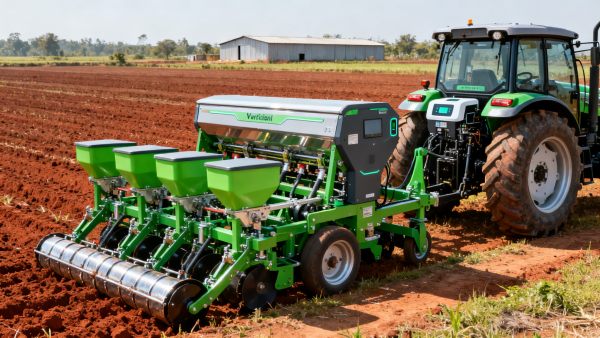
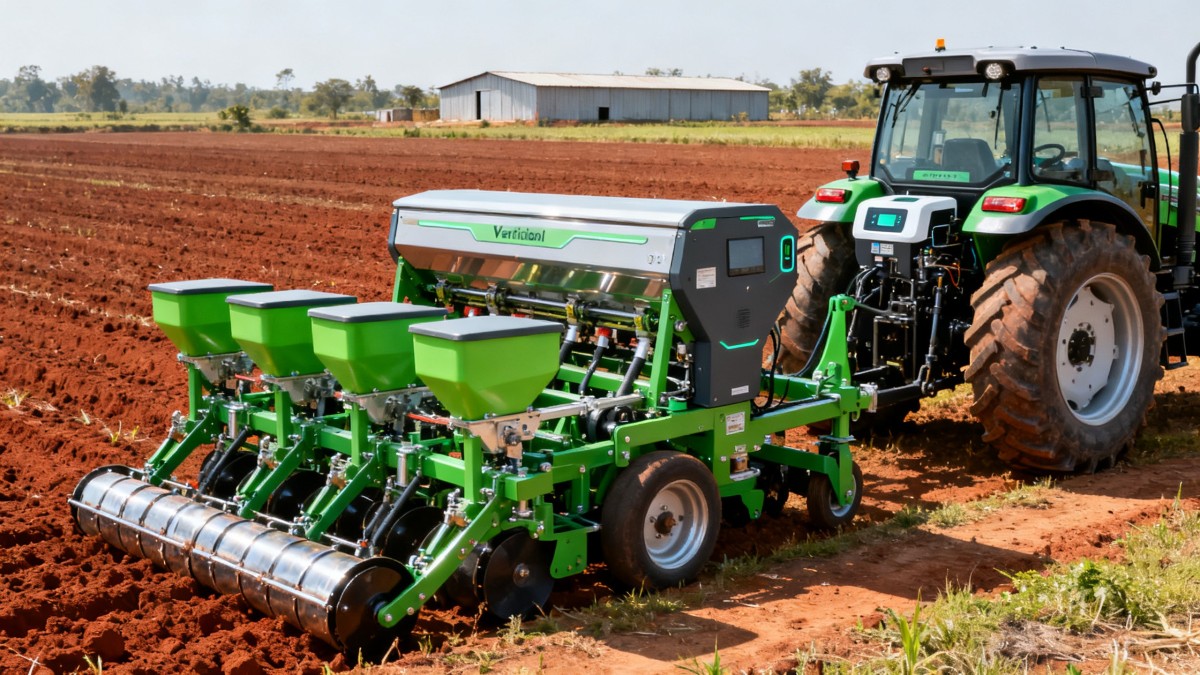
On May 11, 2026, India’s Ministry of Agriculture and Farmers’ Welfare (MoA&FW) announced an expansion of its Agricultural Machinery Import Duty Exemption List, adding 14 categories of heavy agricultural machinery—including self-propelled forage harvesters, smart variable-rate fertilizer-seed combination units, and electric tractor powertrains. The revision takes effect June 1, 2026, and is expected to reduce the total import tax burden on Chinese heavy agri machinery exports to India by 9–12%. Exporters, component suppliers, and distributors serving the India market should closely monitor implications for pricing, compliance, and supply chain planning.
Event Overview
On May 11, 2026, the Ministry of Agriculture and Farmers’ Welfare (MoA&FW) of India issued an official notification revising the Agricultural Machinery Import Duty Exemption List (2026 Edition). The revision adds 14 categories of heavy agricultural machinery—including self-propelled forage harvesters, smart variable-rate fertilizer-seed combination units, and electric tractor powertrains—to the list of equipment exempt from Basic Customs Duty (BCD) and the Agricultural Infrastructure and Development Cess (AIDC). The updated list becomes effective on June 1, 2026.
Which Subsectors Are Affected
Direct Exporters and Trading Firms
These entities face direct changes in landed cost structure. With BCD and AIDC removed for listed machinery, export pricing can be adjusted competitively—especially where Indian importers benchmark against duty-inclusive alternatives. The 9–12% reduction applies to the total import tax component, not the full CIF value; therefore, impact on final pricing depends on how much of the tax was previously absorbed or passed through.
Component and Subsystem Suppliers
Suppliers of critical subsystems—including electric drivetrains, precision guidance modules, and variable-rate control units—may see increased demand if Indian assemblers or OEMs scale up local integration of exempted machinery. However, only fully assembled, listed machinery qualifies for exemption; standalone components remain subject to standard tariff rates unless separately notified.
Manufacturers with India-Focused Product Lines
Companies designing or certifying heavy agri machinery specifically for the Indian market must verify whether their models meet the technical specifications referenced in the exemption notification. Eligibility hinges on formal classification under the Harmonized System (HS) codes specified in the annex—and not merely functional description. Misalignment may result in customs rejection despite product similarity.
Distribution and Aftermarket Service Providers
Lower import duties may accelerate equipment deployment, potentially increasing demand for localized service infrastructure, spare parts logistics, and technician training. Yet the exemption does not extend to after-sales support items (e.g., consumables, diagnostic tools, or non-integrated replacement parts), meaning revenue streams tied to those segments remain unaffected by this policy change.
What Relevant Enterprises or Practitioners Should Focus On
Monitor Official HS Code Allocations and Classification Guidance
The MoA&FW notification references specific HS codes for each exempted category. Exporters must cross-check their product’s declared HS code against the official list—and confirm alignment with Indian customs authorities before shipment. Discrepancies risk delayed clearance or retroactive duty assessment.
Validate Eligibility Against Final Assembly and Origin Requirements
The exemption applies only to fully assembled machinery imported into India. Partially disassembled kits, CKD/SKD shipments, or products incorporating non-Indian-origin subassemblies may not qualify—even if functionally identical—unless explicitly covered in the notification’s scope notes.
Distinguish Between Policy Signal and Operational Impact
While the duty exemption lowers statutory tax liability, actual cost savings depend on factors including exchange rate volatility, port handling charges, and inland freight. Enterprises should model landed cost pre- and post-June 1, 2026—not assume uniform 9–12% margin improvement across all SKUs or trade lanes.
Prepare Documentation and Communication Protocols for Indian Importers
Indian importers will require updated commercial invoices, certificates of origin, and technical compliance statements to claim exemption at customs. Exporters should proactively update templates and train sales teams to provide these documents without delay—avoiding bottlenecks during initial implementation phase.
Editorial Perspective / Industry Observation
Observably, this revision signals India’s continued prioritization of mechanization in high-value, low-coverage farming segments—particularly forage production, precision input application, and electrification-readiness. Analysis shows the inclusion of electric tractor powertrains—rather than complete tractors—suggests a deliberate focus on enabling domestic assembly capacity rather than promoting turnkey imports. From an industry perspective, the move is best understood not as a broad tariff liberalization, but as a targeted incentive aligned with India’s National Mission on Agricultural Extension and Technology and state-level subsidies for ‘smart’ farm equipment. It remains to be seen whether similar exemptions will extend to maintenance services or digital platform integrations in future revisions.
This development is more a calibrated policy signal than an immediate market shift: eligibility conditions are narrow, implementation timelines are short, and administrative readiness across Indian ports varies. Continuous monitoring of customs advisories and state-level adoption of complementary subsidy schemes will determine real-world traction.
Conclusion
This exemption adjustment reflects India’s strategic effort to accelerate adoption of advanced, energy-efficient farm machinery—particularly in areas where domestic manufacturing capacity remains limited. For international suppliers, it presents a measurable, time-bound opportunity to improve price competitiveness—but only for precisely defined, fully compliant product categories. Current understanding should treat the revision as a procedural enabler, not a structural market catalyst. Its significance lies less in immediate volume uplift and more in reinforcing long-term policy direction toward technology-enabled agriculture modernization.
Source Disclosure
Primary source: Official notification issued by India’s Ministry of Agriculture and Farmers’ Welfare (MoA&FW), dated May 11, 2026, titled Agricultural Machinery Import Duty Exemption List (2026 Revision).
Note: Implementation details—including customs classification procedures, documentation requirements, and potential state-level co-subsidies—are still pending formal circulars from the Central Board of Indirect Taxes and Customs (CBIC) and respective State Agriculture Departments. These remain under observation.
Related Intelligence
- Heavy Agri MachineryEvaluating Farm Equipment Distributors: Parts Availability and Service CoverageCompare farm equipment distributors on critical parts availability, service coverage, and repair response. Learn what to verify before buying to reduce costly downtime.
- Heavy Agri MachineryHow Does Market Forecasting Help Plan Farm Machinery Procurement?How does market forecasting help agri procurement planning? Discover how to time machinery purchases, protect cash flow, and reduce delivery risks before critical farm deadlines.
- Heavy Agri MachineryIs It Safe to Source Farm Machinery from Emerging Markets?Is it safe to source agri machinery from emerging markets? Discover how to verify suppliers, check compliance, and secure parts support to protect your farm and avoid costly buying mistakes.
The Morning Broadsheet
Daily chemical briefings, market shifts, and peer-reviewed summaries delivered to your terminal.
