

The Authority in Global Agricultural Chemistry & Bio-Resources
China Aeration Firms Land €320M SalMar RAS Deal
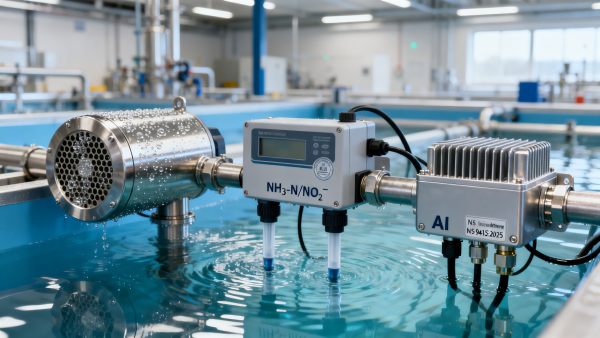
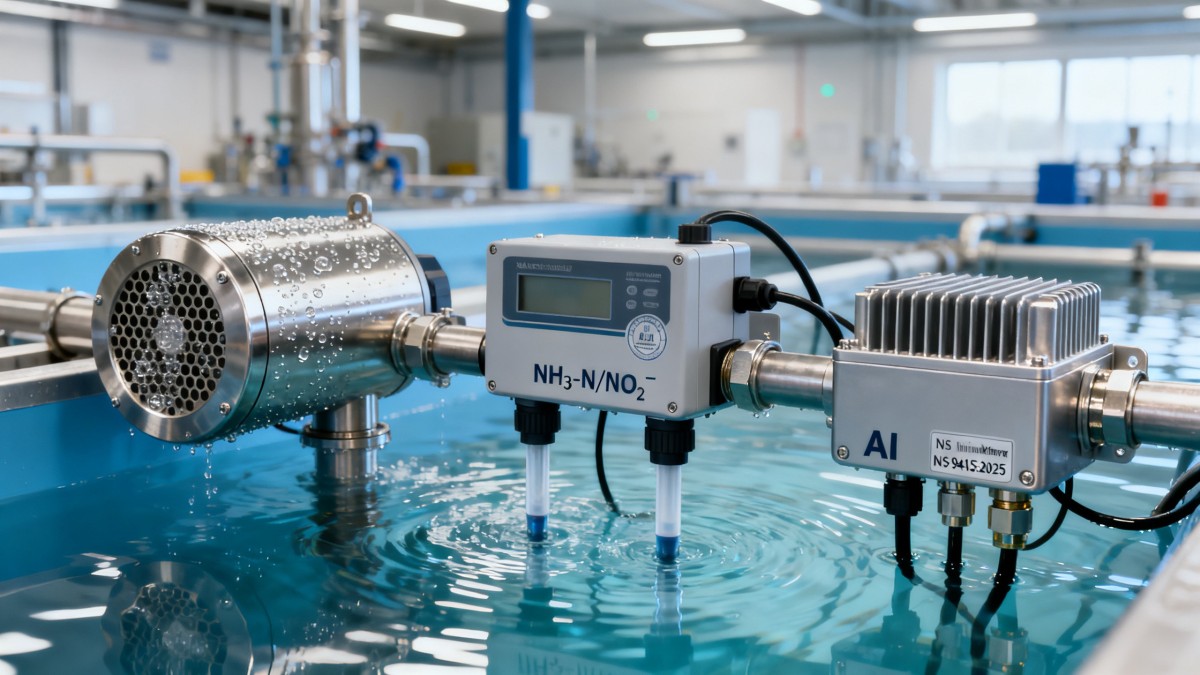
On May 13, 2026, Norwegian salmon farming leader SalMar signed a landmark three-year supply agreement worth €320 million with two Chinese companies specializing in aeration and water treatment technologies. The deal centers on core Recirculating Aquaculture System (RAS) equipment — including high-efficiency micro-pore aerators, dual-parameter online sensors for ammonia nitrogen and nitrite, and AI-driven water quality control modules. Its significance lies not only in scale but in validation: it marks the first time Chinese-made advanced aquaculture hardware has been formally integrated into Norway’s mainstream, standards-strict aquaculture supply chain — a sector long dominated by European and North American suppliers.
Event Overview
On May 13, 2026, SalMar announced it had entered into a three-year, €320 million framework agreement with two China-based Aeration & Water Tech enterprises. The agreement covers supply of RAS core equipment — specifically high-efficiency micro-pore aeration units, real-time ammonia nitrogen/nitrite dual-parameter sensors, and AI-enabled water quality regulation modules. All delivered equipment must comply fully with NS 9415:2025, Norway’s national standard for aquaculture equipment. Deliveries are scheduled to begin in Q3 2026, in phased batches.
Industries Affected
Direct Exporting Enterprises: Chinese manufacturers directly supplying under this agreement face heightened compliance pressure — not just on product performance, but on documentation traceability, third-party certification (e.g., DNV GL or SINTEF), and after-sales technical support capability in EU/Nordic jurisdictions. Revenue visibility improves significantly over three years, yet margin sustainability hinges on managing rising certification and localization service costs.
Raw Material Procurement Enterprises: Suppliers of critical components — such as corrosion-resistant titanium sensor housings, food-grade silicone membranes for micro-pore diffusers, and industrial-grade AI edge computing chips — may see upstream demand acceleration. However, exposure is indirect and conditional: only those already qualified under ISO 13485 or IATF 16949 (for sensor/actuator sub-assemblies) are likely to benefit, as SalMar’s audit requirements cascade down the tier-2 supply chain.
Contract Manufacturing & Assembly Enterprises: Domestic EMS (electronics manufacturing services) and precision mechanical assembly firms supporting the two lead contractors may experience increased order volume — particularly for sensor calibration, firmware integration, and pre-shipment conformity testing. Yet their role remains largely invisible in the contract; they gain no direct branding leverage and remain exposed to shifting OEM specifications tied to NS 9415:2025 interpretation updates.
Supply Chain Service Providers: Freight forwarders with cold-chain-capable ocean and air logistics expertise — especially those offering EU/Nordic customs brokerage, CE/UKCA marking advisory, and NS-standard-compliant packaging certification — stand to gain from expanded project logistics scope. Their value-add shifts from pure transportation to regulatory navigation, demanding deeper technical literacy in aquaculture equipment standards.
Key Considerations and Recommended Actions
Verify NS 9415:2025 Implementation Readiness
Enterprises involved — whether as prime contractors or Tier-1 suppliers — must conduct internal gap assessments against NS 9415:2025’s mechanical safety, material biocompatibility, and data integrity clauses. Third-party verification (not self-declaration) is mandatory for market access; delays in obtaining test reports from accredited labs (e.g., SINTEF Ocean or DNV) could postpone Q3 2026 deliveries.
Strengthen Local Technical Support Infrastructure in Europe
SalMar requires on-site commissioning, remote diagnostics, and rapid-response maintenance. Relying solely on remote support or ad-hoc local partners risks contractual penalties. Firms should consider establishing at least one certified service hub in Norway or the Netherlands by end-2026 — not merely as a sales office, but as a certified repair and calibration center.
Map Sub-Supplier Compliance Cascades
The agreement triggers downstream audits: if a sensor fails field validation due to faulty membrane material, liability may extend beyond the final assembler to its raw material vendor. Companies must formalize supplier declarations of conformity (DoC) and obtain material test certificates traceable to batch-level production records — a step many Chinese component suppliers currently lack.
Editorial Perspective / Industry Observation
Observably, this deal signals a structural shift — not just a commercial win. It reflects growing international acceptance of Chinese engineering maturity in mission-critical environmental control systems, provided it meets stringent, outcome-oriented standards (like NS 9415:2025) rather than brand reputation alone. Analysis shows that the €320 million figure represents ~18% of SalMar’s projected 2026–2028 RAS capex — suggesting strategic diversification away from single-source dependency, not just cost optimization. From an industry perspective, what matters more than the headline sum is the precedent: Norwegian regulators have implicitly endorsed Chinese-built hardware for use in Category A (high-biosecurity) RAS farms — a threshold previously considered unreachable without decades-long market presence.
Conclusion
This agreement is less a one-off export success and more a credentialing milestone: it confirms that select Chinese water technology firms now meet the functional, regulatory, and service thresholds required by the world’s most exacting aquaculture operators. That credibility — once earned — can be leveraged across other regulated marine sectors, including offshore aquaculture monitoring and coastal wastewater reuse. Still, scalability remains unproven; replication with other Nordic or Japanese buyers will depend on consistent execution across multiple delivery tranches — not just initial certification.
Source Attribution
Official announcement issued by SalMar ASA on May 13, 2026 (press release #SM-2026-05-13-RAS); NS 9415:2025 standard published by Standards Norway (2025 edition, effective Jan 1, 2026); supplementary technical annexes reviewed via SINTEF Ocean’s publicly accessible compliance guidance portal (v.2.1, updated April 2026). Note: Ongoing monitoring is advised for potential amendments to NS 9415:2025 Annex C (cybersecurity requirements for connected RAS modules), expected in Q4 2026.
Related Intelligence
- Aeration & Water TechHow Water Treatment Research Guides Technology Selection for Industrial Wastewater ProjectsWater treatment research guides smarter industrial wastewater technology selection. Learn how to assess variable streams, pilot risks, compare process trains, and reduce compliance costs.
- Aeration & Water TechSelecting Solids Filtration for Aquaculture: Flow Rates, Loading, and Fish WelfareSolids filtration aquaculture guide: compare flow rates, peak loading, capture performance, maintenance, and fish welfare to choose a reliable system.
- Aeration & Water TechWhat RO water treatment systems deliver consistent 98% salt rejection at 25°C with feed TDS over 3,000 ppm?RO water treatment systems that deliver proven 98% salt rejection at 25°C with >3,000 ppm TDS—engineered for API synthesis, aquaculture & grain processing.
The Morning Broadsheet
Daily chemical briefings, market shifts, and peer-reviewed summaries delivered to your terminal.
