

The Authority in Global Agricultural Chemistry & Bio-Resources
What Agri Equipment for Industrial Agriculture Is Best for Large-Scale Field Operations?
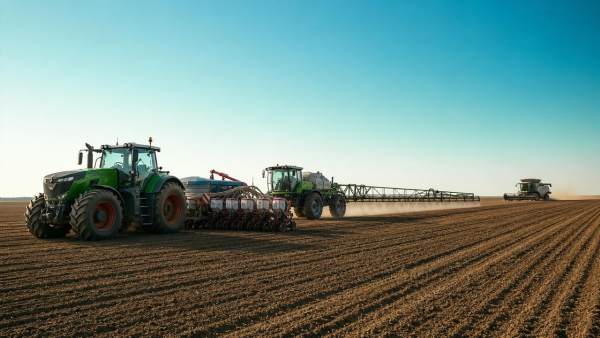
Choosing the right Agri Equipment for industrial agriculture shapes yield stability, labor efficiency, fuel use, and long-term capital performance. In large-scale field operations, the best machine is rarely the biggest or newest. It is the one that fits field size, crop system, input strategy, data workflow, and service support.
That matters even more in today’s environment. Large farms are dealing with tighter compliance, volatile input costs, and pressure to document every operational decision. In that setting, Agri Equipment for industrial agriculture becomes part of a wider industrial system, not just a machinery purchase.
From the perspective of AgriChem Chronicle, where machinery, fine chemicals, feed processing, and regulated supply chains intersect, the strongest equipment strategy is one that connects field performance with traceability, uptime, and measurable return.
What matters most when selecting Agri Equipment for industrial agriculture
Before comparing brands or horsepower, it helps to narrow the decision around operational fit. Large-scale field operations usually gain more from system compatibility than from isolated machine upgrades.
The first review should cover acreage, crop rotation, field shape, weather risk, operator availability, and support response time. If those factors are unclear, even premium Agri Equipment for industrial agriculture can underperform.
The image below highlights the main equipment categories typically evaluated for broadacre operations.
[Image 01: Core agri equipment categories for large-scale field operations]
A practical selection process usually starts with six equipment groups. Each one affects output, timing, and compliance in a different way.
- High-horsepower tractors remain the backbone of Agri Equipment for industrial agriculture, but the right choice depends on hydraulic capacity, implement matching, fuel efficiency, and telematics integration, not headline power alone.
- Planters and seed drills should be judged by placement accuracy, row-unit durability, variable-rate capability, and ease of calibration, because missed spacing quickly compounds across large acreage.
- Self-propelled sprayers add value when nozzle control, boom stability, section shutoff, and prescription mapping reduce chemical waste while supporting documented application compliance.
- Combines perform best in large-scale field operations when grain handling, loss monitoring, residue management, and local parts support match harvest intensity and weather windows.
- Tillage and soil preparation tools should be selected by soil structure goals, residue levels, moisture conditions, and pass efficiency, rather than habit or legacy fleet preference.
- Precision farming systems often deliver the highest hidden return, especially when guidance, implement control, yield mapping, and machine data connect cleanly across the entire fleet.
The best equipment mix by operational priority
Not every operation needs the same machinery profile. The best Agri Equipment for industrial agriculture changes depending on what is limiting performance today.
If timing is the biggest constraint
Operations that lose yield through delayed planting or harvest should prioritize field capacity first. That usually means fewer machine bottlenecks, wider implements, and faster transport logistics.
In this scenario, machine uptime matters more than advanced optional features. A slightly simpler platform with stronger dealer support can outperform a more sophisticated machine that sits waiting for parts.
If input efficiency is under pressure
Where fertilizer, fuel, and crop protection costs are rising, precision tools move to the top of the list. Section control, auto-steer, variable-rate application, and real-time machine diagnostics deserve attention.
This is where Agri Equipment for industrial agriculture overlaps with the wider AgriChem Chronicle focus on regulated inputs and traceable application. Better equipment records support both cost control and audit readiness.
If labor is difficult to stabilize
Operations facing operator shortages should lean toward intuitive controls, remote support, automated steering, and simplified maintenance access. Equipment that reduces training time often creates faster real-world gains.
It is easy to underestimate this factor. A technically strong machine still loses value if only one person on site can operate or troubleshoot it confidently.
A workable shortlist for capital planning
When narrowing options, a simple comparison matrix helps. The table below keeps the discussion focused on operating impact instead of sales language.
Where many equipment decisions go wrong
A surprising number of machinery investments miss the mark for very basic reasons. The issue is often not technical quality, but poor alignment between machine capability and operating conditions.
- Do not judge Agri Equipment for industrial agriculture only by purchase price. Downtime exposure, fuel burn, maintenance intervals, and software subscriptions often reshape total cost within two seasons.
- Avoid mixed technology stacks that cannot share guidance lines, machine records, or prescription files. Fragmented systems quietly erode the value of precision farming investments.
- Service access should be treated as a core buying criterion. For large-scale field operations, delayed support during planting or harvest can cost more than any financing difference.
- Do not overlook regulatory and documentation needs around chemical application, soil impact, and traceability. Equipment that supports clean records has growing strategic value.
- Used equipment can be a smart move, but only when wear points, software support, and remaining parts availability are verified with discipline.
How this looks in real operating environments
In broadacre grain systems, the strongest returns often come from matching planter accuracy with sprayer precision and combine data capture. That creates a closed loop between seeding, input use, and harvest analysis.
In mixed industrial agriculture systems, where crop production may connect to feed processing or bio-based raw material supply, equipment decisions need to support consistency as much as volume. That is especially relevant when downstream buyers expect documented quality and scheduling reliability.
Another common case is expansion through leased land or regional consolidation. Here, transport efficiency, machine mobility, and service network coverage can matter more than maximum field performance on a single block.
These are the situations where Agri Equipment for industrial agriculture should be reviewed as part of a supply chain system. That broader view aligns closely with AgriChem Chronicle’s focus on operational transparency across agricultural and industrial production networks.
A smarter way to make the final decision
A reliable purchase process usually includes a short field-capacity model, a total-cost review, a compatibility check, and a service-risk assessment. This sounds simple, but it prevents most expensive mistakes.
- Map each machine to one measurable outcome, such as fewer passes, lower overlap, faster planting, or cleaner records, before discussing optional add-ons.
- Request local uptime data, parts lead times, and training support, because dealer performance often determines whether premium Agri Equipment for industrial agriculture pays back on schedule.
- Check whether machine data exports cleanly into agronomy, compliance, and finance systems. Integration gaps usually appear after delivery, when they are harder to fix.
- Compare financing structures against seasonal cash flow, not just annual cost. Equipment pressure often shows up between input purchasing and harvest revenue.
- Run a realistic implementation plan for operators, calibration, and in-season support, because adoption failure is often operational, not mechanical.
The best Agri Equipment for industrial agriculture for large-scale field operations is the equipment that improves timing, reduces waste, supports compliance, and fits the operating system already in place. That answer may include tractors, planters, sprayers, combines, and digital tools, but the winning combination is always context-specific.
A strong next step is to rank current bottlenecks, review fleet compatibility, and compare every machinery option against one clear business outcome. When that process is disciplined, equipment buying becomes less about machinery inventory and more about building resilient industrial agriculture performance.
Related Intelligence
- Heavy Agri MachineryEvaluating Farm Equipment Distributors: Parts Availability and Service CoverageCompare farm equipment distributors on critical parts availability, service coverage, and repair response. Learn what to verify before buying to reduce costly downtime.
- Heavy Agri MachineryHow Does Market Forecasting Help Plan Farm Machinery Procurement?How does market forecasting help agri procurement planning? Discover how to time machinery purchases, protect cash flow, and reduce delivery risks before critical farm deadlines.
- Heavy Agri MachineryIs It Safe to Source Farm Machinery from Emerging Markets?Is it safe to source agri machinery from emerging markets? Discover how to verify suppliers, check compliance, and secure parts support to protect your farm and avoid costly buying mistakes.
The Morning Broadsheet
Daily chemical briefings, market shifts, and peer-reviewed summaries delivered to your terminal.
