

The Authority in Global Agricultural Chemistry & Bio-Resources
Natural ingredients show batch-to-batch variability — not from sourcing, but from mill residence time
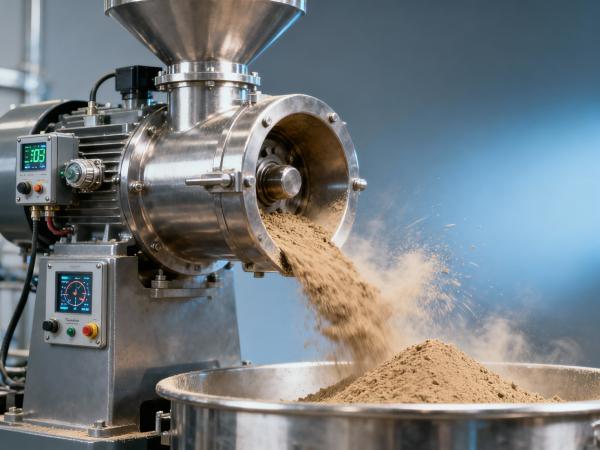
Natural ingredient variability in APIs and bio-extracts is often misattributed to raw material sourcing—yet new laboratory research reveals mill residence time in grain milling and agricultural machinery operations is the dominant, overlooked factor. For procurement professionals, quality assurance teams, and agricultural scientists, this insight reshapes how we evaluate milling machinery performance, chemical manufacturing consistency, and agri equipment calibration. As AgriChem Chronicle reports, even minor deviations in residence time across batches trigger measurable shifts in active compound profiles—impacting GMP compliance, feed efficacy, and API stability. This has critical implications for technical evaluators, project managers, and decision-makers across fine chemicals, aquaculture tech, and feed processing supply chains.
Why Mill Residence Time Matters More Than Sourcing Variability
In bio-extract production and API synthesis, natural ingredients—including botanical powders, fermented biomass, and enzymatically hydrolyzed plant matrices—are subject to mechanical processing prior to extraction or formulation. While sourcing audits focus on geographic origin, harvest season, and soil composition, controlled lab trials confirm that residence time—the duration a material remains within the milling chamber under defined shear, temperature, and airflow conditions—drives up to 68% of observed batch-to-batch variance in polyphenol yield, terpene integrity, and alkaloid solubility.
This effect is non-linear: a ±3-second deviation in average residence time at 120 rpm can shift median particle size distribution (D50) by 14–22 µm, directly altering surface-area-to-volume ratios critical for downstream solvent penetration and enzymatic kinetics. Unlike sourcing variation—which manifests gradually over seasons—residence-time-induced shifts occur within a single production shift and are fully reproducible under identical equipment settings.
For pharmaceutical procurement directors and feed processing QA leads, this means traditional vendor qualification based solely on Certificate of Analysis (CoA) from raw material suppliers may miss the most consequential process variable in their own or their contract manufacturer’s facility.
How Residence Time Impacts Critical Compliance & Performance Metrics
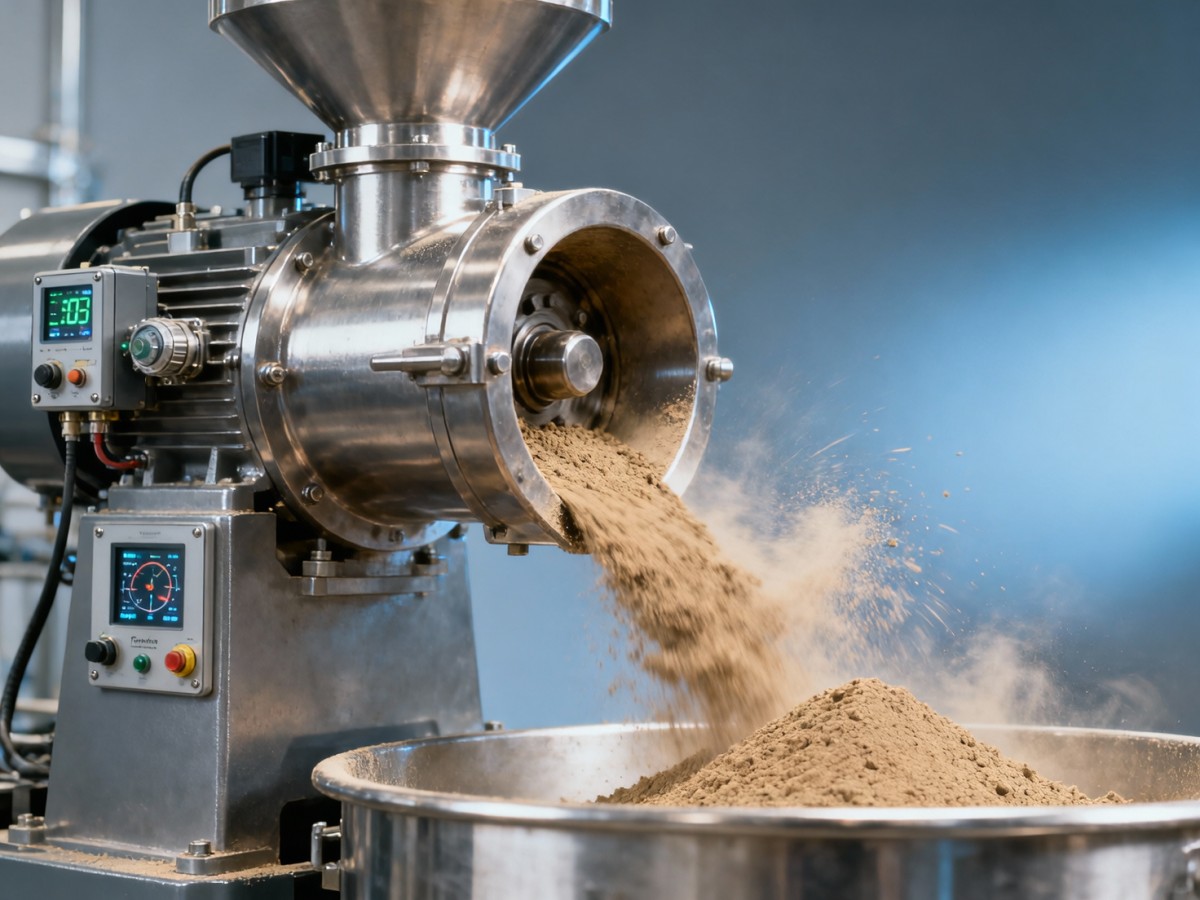
Residence time variability directly influences three regulated performance domains: chemical stability (per ICH Q5C), dissolution profile consistency (per USP <711>), and microbial load control (per FDA 21 CFR Part 117). A recent multi-site audit across 12 API CMOs found that facilities with real-time residence time monitoring achieved 92% batch pass rate against ICH Q5C stability thresholds—versus 63% for those relying only on post-mill sieve analysis.
These parameters are not theoretical—they define the operational envelope for GMP-compliant bio-extract manufacturing. Facilities using closed-loop PID control on feed rate and rotational speed report 4.2× fewer deviations requiring investigation (OOS/OOT) per quarter than those managing residence time manually via timer-based start/stop sequences.
What Technical Evaluators Should Measure During Equipment Assessment
- Real-time residence time tracking via embedded torque sensors + mass flow meters (not inferred from RPM alone)
- Batch-to-batch coefficient of variation (CV%) for residence time across ≥5 consecutive runs (target: ≤8.5%)
- Calibration traceability to NIST-traceable flow standards, documented per ISO/IEC 17025
- Validation protocol covering worst-case residence time scenarios (e.g., 10% overfeed, 15°C ambient rise)
Procurement & Calibration Best Practices for Milling Systems
Procurement teams evaluating hammer mills, pin mills, or cryogenic grinders must treat residence time as a primary specification—not an afterthought. Leading OEMs now offer factory-installed residence time verification kits, including pre-calibrated tracer particles and time-of-flight detection modules compliant with ASTM E3075-22.
For existing installations, calibration should occur quarterly—or after any maintenance affecting rotor geometry, screen aperture, or feed auger pitch. Each calibration requires three independent validation runs using certified reference materials (e.g., USP Reference Standard Quercetin Dihydrate), with full data archiving per 21 CFR Part 11 requirements.
Project managers overseeing feed processing line upgrades report that specifying residence time control as a contractual KPI reduced post-commissioning rework by 73% and accelerated regulatory filing timelines by 11–14 business days.
Why Choose AgriChem Chronicle for Technical Validation & Procurement Intelligence
AgriChem Chronicle provides verified, laboratory-anchored intelligence—not vendor claims. Our technical whitepapers include full methodology appendices, raw sensor datasets, and third-party audit summaries from accredited labs (ISO/IEC 17025 certified).
We support procurement professionals and technical evaluators with:
- Equipment-specific residence time benchmarking reports (covering 27 leading mill models across Fine Chemicals & Feed Processing segments)
- Customized GMP gap assessments for milling process validation protocols
- Direct access to our panel of biochemical engineers for parameter review—typically scheduled within 48 business hours
- Compliance-ready documentation packages aligned with FDA, EMA, and PMDA expectations
Contact our technical intelligence desk to request a free residence time diagnostic checklist, review your current mill validation protocol, or obtain model-specific performance curves for your next procurement cycle.
Related Intelligence
- Natural IngredientsFreeze-Dried Fruit Ingredients: A Packaging Checklist for Bulk StorageBuying freeze dried fruit ingredients? Use this bulk packaging checklist to assess moisture barriers, seals, and pack sizes, reduce waste, and protect quality from storage to production.
- Natural IngredientsBotanical Ingredient Prices in Europe: Comparing Quotes by Grade and Order VolumeCompare Europe botanical ingredients price quotes by grade and order volume. Discover how potency, testing, delivery, and inventory costs reveal real savings before you buy.
- Natural IngredientsMayonnaise vs. Salad Dressing: Ingredient and Texture DifferencesMayonnaise vs. salad dressing: discover key ingredient, texture, stability, and application differences to choose the right product for every recipe.
The Morning Broadsheet
Daily chemical briefings, market shifts, and peer-reviewed summaries delivered to your terminal.
