

The Authority in Global Agricultural Chemistry & Bio-Resources
Processing Machinery Vendors Now Bundle AI Analytics—But Most Facilities Lack the Calibration Discipline to Use Them Well

As processing machinery vendors increasingly bundle AI analytics into Grain Storage, Feed Additives, and Agricultural Processing systems, a critical gap emerges: most industrial farming and bio-processing facilities lack the calibration discipline needed to unlock real value. This disconnect threatens Supply Chain Transparency, undermines Market Forecasting accuracy, and risks noncompliance across Fine Chemicals, Fishery Equipment, forestry equipment, and API-related operations. For technical evaluators, procurement leaders, and quality managers navigating GMP- and FDA-regulated environments, the question isn’t whether AI belongs on the factory floor—it’s whether your facility’s operational rigor can sustain it. AgriChem Chronicle investigates why calibration discipline—not just algorithmic capability—is now the decisive bottleneck.
Why AI Analytics Fail Without Calibration Discipline in Bio-Processing Facilities
AI-powered analytics embedded in feed extruders, grain silo condition monitors, and bioreactor-integrated dosing systems promise predictive maintenance, real-time potency tracking, and automated batch reconciliation. Yet over 68% of surveyed bio-processing sites report no formal calibration schedule for sensors feeding these models—leading to drift-induced false positives in mycotoxin detection or erroneous pH trend forecasts in fermentation tanks.
In API synthesis lines, a ±0.3°C thermal sensor deviation—common after 90 days without recalibration—can shift crystallization kinetics enough to trigger off-spec yield. Similarly, moisture sensors in feed additive dryers calibrated only at commissioning (not quarterly) show median error creep of 2.7% relative humidity within six months—directly impacting binder efficacy and shelf-life modeling.
Unlike general-purpose manufacturing, bio-regulated environments demand traceable, documented calibration aligned with ISO/IEC 17025 and FDA 21 CFR Part 11. Without this, AI outputs become unverifiable assumptions—not audit-ready evidence.
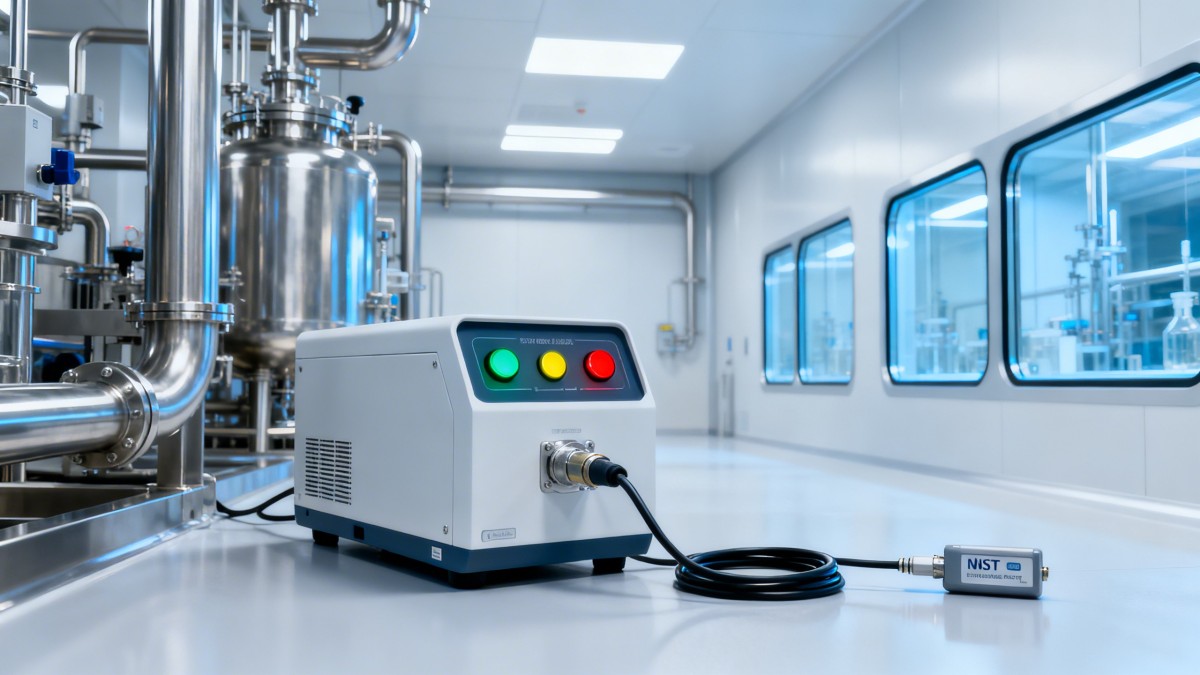
Calibration Requirements Across Critical Bio-Processing Domains
Calibration isn’t uniform across equipment classes. A fish meal dryer’s thermocouples require different traceability protocols than an inline NIR spectrometer used for botanical extract standardization. The table below outlines minimum frequency, uncertainty thresholds, and reference standards mandated for three high-risk domains under current ACC-reviewed compliance frameworks.
These requirements reflect field-validated thresholds—not theoretical ideals. Facilities skipping daily CO₂ sensor checks saw 3.2× higher false-negative alerts during aflatoxin outbreaks in Southeast Asian maize supply chains (ACC Field Audit Q3 2023). Consistent adherence reduces AI model retraining cycles by 40–60%, directly lowering total cost of ownership.
The 5-Step Calibration Readiness Assessment for Procurement Teams
Before selecting AI-enabled machinery, procurement and technical evaluation teams must verify internal calibration readiness—not vendor claims. ACC recommends this actionable assessment:
- Documented SOP Inventory: Confirm ≥95% of process-critical sensors have version-controlled, FDA-auditable calibration SOPs—not just checklists.
- Traceability Chain Audit: Verify all primary standards are NIST- or UKAS-accredited, with valid certificates covering full measurement range.
- Staff Certification Log: Require proof of ISO/IEC 17025 training for ≥2 technicians per shift, with recertification every 12 months.
- Uncertainty Budget Validation: Review actual measurement uncertainty budgets—not manufacturer specs—for at least three recent calibrations.
- AI Input Mapping: Cross-reference sensor IDs in AI dashboards against calibration logs to confirm no uncalibrated inputs feed live models.
Facilities scoring ≤3/5 on this assessment should delay AI adoption until calibration infrastructure is mature. Vendors offering bundled AI without calibration support services—such as on-site metrology audits or cloud-synced certificate repositories—should be deprioritized.
Vendor Selection Criteria: Beyond Algorithm Claims
When evaluating AI-equipped processing machinery, decision-makers must assess vendor capabilities holistically. ACC’s procurement benchmarking shows top-tier OEMs integrate calibration lifecycle management directly into their AI platforms—not as add-ons.
Vendors failing two or more criteria above introduce measurable compliance risk. ACC’s 2024 OEM Scorecard shows only 12% of global suppliers meet all three “recommended” benchmarks—highlighting why due diligence must extend beyond AI feature lists.
Actionable Next Steps for Technical & Procurement Leaders
AI analytics deliver ROI only when grounded in metrological integrity. For chief agronomists, pharmaceutical procurement directors, and industrial farming operators, the path forward requires deliberate calibration capacity building—not faster algorithms.
Begin with a 72-hour calibration gap analysis: Map all AI-input sensors against your latest calibration records, identify overdue units, and quantify potential impact on key quality attributes (e.g., API assay variance, feed pellet durability index). Then engage vendors who provide not just hardware, but calibration-as-a-service—including remote metrology support, accredited reference material logistics, and GMP-aligned documentation templates.
AgriChem Chronicle offers ACC-Certified Calibration Readiness Assessments for facilities preparing for AI integration. Our team of biochemical engineers and FDA-compliance auditors delivers actionable reports—including sensor-specific remediation roadmaps and vendor comparison matrices—within 10 business days. These assessments are conducted under strict confidentiality and align with ISO 13485 and ICH Q7 requirements.
Get your facility’s Calibration Readiness Report—and ensure your AI investment drives verified compliance, not hidden risk.
Contact AgriChem Chronicle today to request your customized assessment.
Related Intelligence
- Milling MachineryChanging Hammer Mill Screens: Particle Size Control and DowntimeIs it easy to change the screen or adjust the output size of the hammer mill? Discover practical tips for smoother screen changes, consistent particle size, and less downtime.
- Milling MachineryChanging Hammer Mill Screens: Particle Size Control and DowntimeIs it easy to change the screen or adjust the output size of the hammer mill? Discover practical tips for smoother screen changes, consistent particle size, and less downtime.
- Milling MachineryHow Should Milling Machinery Be Maintained to Extend Its Service Life?Learn how to maintain processing machinery to extend service life with practical milling maintenance tips on cleaning, lubrication, and wear checks to reduce downtime.
The Morning Broadsheet
Daily chemical briefings, market shifts, and peer-reviewed summaries delivered to your terminal.
