

The Authority in Global Agricultural Chemistry & Bio-Resources
India Proposes Anti-Dumping Duties on Imported Agricultural Machinery: Initial Ruling Targets Chinese Tracked Tractors and Combine Harvesters

India Proposes Anti-Dumping Duties on Imported Agricultural Machinery: Initial Ruling Targets Chinese Tracked Tractors and Combine Harvesters
Introduction
On March 27, 2026, India's Ministry of Commerce and Industry issued a preliminary anti-dumping ruling, proposing temporary duties of 18.3%–26.7% on Chinese-made tracked tractors (HS 870130) and combine harvesters (HS 870710) for six months. This move directly impacts agricultural machinery trade, manufacturing, and supply chain strategies. The decision is significant for exporters, importers, and manufacturers in both countries, prompting urgent industry responses to mitigate risks.
Event Overview
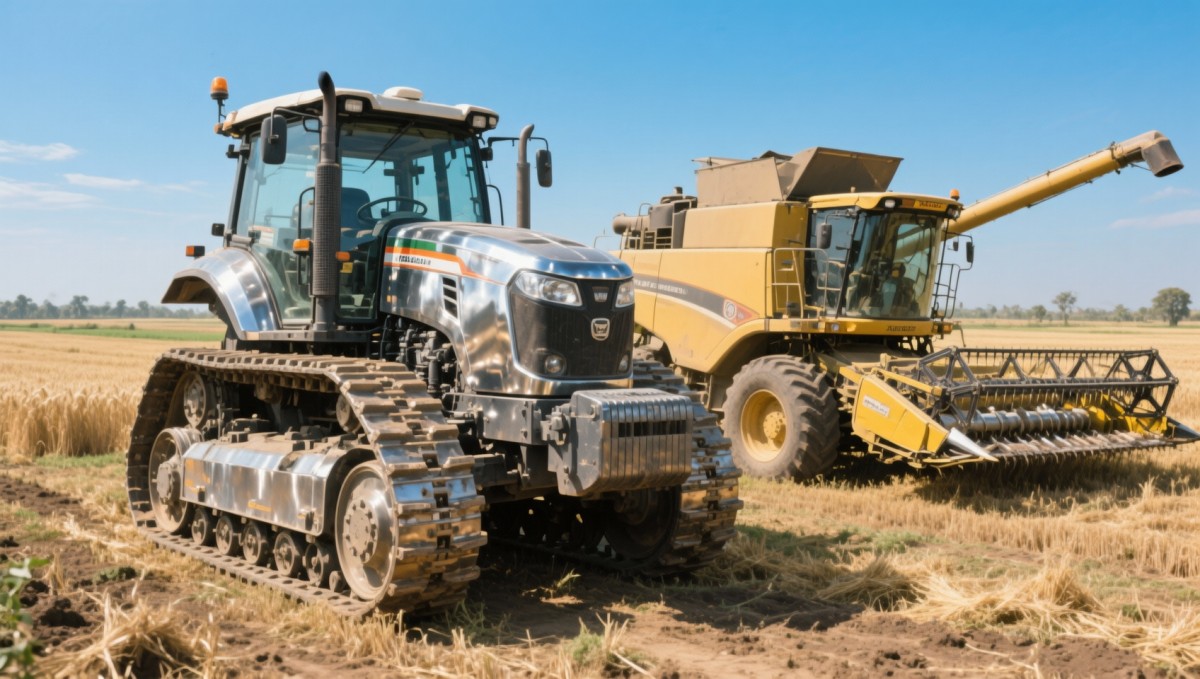
The Indian government's preliminary anti-dumping ruling targets two key agricultural machinery products from China: tracked tractors and combine harvesters. The temporary duties, ranging from 18.3% to 26.7%, are set to last for six months. The China Agricultural Machinery Industry Association has already convened an emergency meeting, suggesting exporters adopt a 'complete machine + localized assembly package' model to circumvent potential trade barriers.

Impact on Sub-Sectors
Direct Trade Enterprises
Exporters of Chinese agricultural machinery to India will face immediate cost increases due to the proposed duties. This could reduce competitiveness against local Indian manufacturers or other international suppliers. Companies heavily reliant on the Indian market may need to reassess pricing strategies or explore alternative markets.
Manufacturing and Assembly Enterprises
The ruling may accelerate shifts toward localized assembly in India or third countries. Manufacturers might consider setting up knockdown kit production or partnerships with Indian firms to avoid duties. This could reshape supply chains and production footprints in the sector.
Supply Chain Service Providers
Logistics and component suppliers may need to adjust to potential changes in trade flows. Increased localization could create opportunities for parts suppliers in India or neighboring countries, while traditional export routes may see reduced volumes.
Key Focus Areas and Recommended Actions
Monitor Policy Developments
Companies should closely track the final ruling after the six-month provisional period. The current proposal may be adjusted based on stakeholder feedback and further investigations.
Evaluate Business Models
The suggested 'complete machine + localized assembly package' approach warrants serious consideration. Businesses should analyze the feasibility of partial manufacturing or assembly in India or other markets to maintain competitiveness.
Diversify Market Strategies
Exporters may need to reduce dependence on the Indian market by exploring alternatives in Southeast Asia, Africa, or Latin America, where similar products face fewer trade barriers.
Engage in Industry Coordination
Participating in collective responses through industry associations could be more effective than individual company actions. The Chinese association's quick response demonstrates the value of coordinated strategies.
Editor's Perspective / Industry Observation
From an industry viewpoint, this preliminary ruling appears more as a warning signal than a final outcome. The six-month provisional period allows for negotiation and adjustment. Historically, such measures often lead to modified business models rather than complete market withdrawal. The agricultural machinery sector should view this as part of broader global trade dynamics, where localization and market adaptation are becoming increasingly important.
Conclusion
India's proposed anti-dumping duties on Chinese agricultural machinery represent a significant but manageable challenge for affected industries. While creating immediate trade barriers, they also push businesses toward more sustainable, localized solutions. The current situation should be understood as a call for strategic adaptation rather than a market closure, with the six-month provisional period offering crucial time for adjustment and negotiation.
Source Information
Primary source: India's Ministry of Commerce and Industry announcement dated March 27, 2026
Additional context: China Agricultural Machinery Industry Association statement
Ongoing developments: Final ruling expected after six-month provisional period
Related Intelligence
- Heavy Agri MachineryEvaluating Farm Equipment Distributors: Parts Availability and Service CoverageCompare farm equipment distributors on critical parts availability, service coverage, and repair response. Learn what to verify before buying to reduce costly downtime.
- Heavy Agri MachineryHow Does Market Forecasting Help Plan Farm Machinery Procurement?How does market forecasting help agri procurement planning? Discover how to time machinery purchases, protect cash flow, and reduce delivery risks before critical farm deadlines.
- Heavy Agri MachineryIs It Safe to Source Farm Machinery from Emerging Markets?Is it safe to source agri machinery from emerging markets? Discover how to verify suppliers, check compliance, and secure parts support to protect your farm and avoid costly buying mistakes.
The Morning Broadsheet
Daily chemical briefings, market shifts, and peer-reviewed summaries delivered to your terminal.
