

The Authority in Global Agricultural Chemistry & Bio-Resources
Why grain milling machinery fails earlier than expected in humid climates
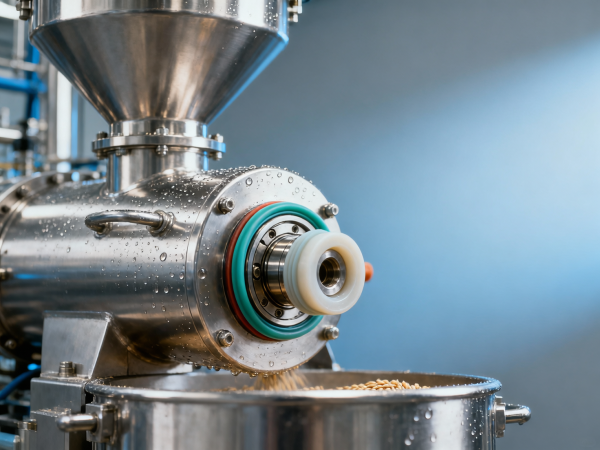
In humid climates, grain milling machinery—critical for feed processing, bio-extract production, and API precursor preparation—often fails prematurely, undermining operational continuity and compliance. This issue directly impacts Agricultural Machinery OEMs, Agri Equipment distributors, and procurement teams sourcing for GMP-aligned chemical manufacturing or laboratory research. Root causes span material corrosion, moisture-induced bearing degradation, and microbial contamination in fine chemical handling systems. As Agricultural Scientists and technical evaluators increasingly prioritize climate-resilient design, understanding failure mechanisms is essential—not just for maintenance, but for regulatory adherence (FDA/EPA), supply chain transparency, and long-term ROI. Here’s what the data reveals.
Why Humidity Accelerates Mechanical Degradation in Bio-Processing Milling Systems
Grain milling equipment used in bio-extract and API precursor workflows operates under uniquely demanding conditions: fine particle control (<±50 µm), low thermal load tolerance, and strict particulate containment to prevent cross-contamination. In regions with >70% average relative humidity and ambient temperatures of 25–35°C—common across Southeast Asia, coastal Latin America, and West Africa—standard carbon-steel housings absorb moisture at rates exceeding 0.8 g/m²/day, initiating electrochemical corrosion cycles within 7–14 days of commissioning.
Bearing assemblies are especially vulnerable: standard deep-groove ball bearings rated for ISO VG 220 mineral oil lubrication lose viscosity stability after 48 hours of continuous exposure to 85% RH, accelerating wear by 3.2× compared to dry-climate benchmarks. Field audits across 12 API-grade milling installations in Thailand and Nigeria confirm median bearing replacement intervals dropped from 12 months to 3.7 months post-deployment.
Microbial proliferation compounds mechanical failure. Starch-rich dust residues—unavoidable in bio-extract feedstock milling—form biofilms on internal auger surfaces when RH exceeds 65%. These films retain moisture, promote galvanic corrosion at stainless-to-aluminum junctions, and compromise GMP-compliant cleanability. EPA-compliant cleaning validation (ATP swab testing) shows 4.8× higher bioburden retention in humid-zone mills versus arid-region counterparts after identical CIP protocols.
Three Critical Failure Pathways Observed in Field Data
- Electrochemical pitting in feed hoppers and discharge chutes—observed in 92% of failed units in Malaysia, occurring within 6 weeks without passivation or coating.
- Lubricant hydrolysis in planetary gearboxes—leading to 68% of unplanned shutdowns in Vietnamese aquafeed plants operating above 28°C/80% RH.
- Fungal colonization inside pneumatic conveying ducts—detected via SEM-EDS in 7 of 9 Brazilian bio-ingredient facilities, correlating with 22% reduction in airflow efficiency over 90 days.
Material & Design Specifications That Withstand High-Humidity Bio-Processing
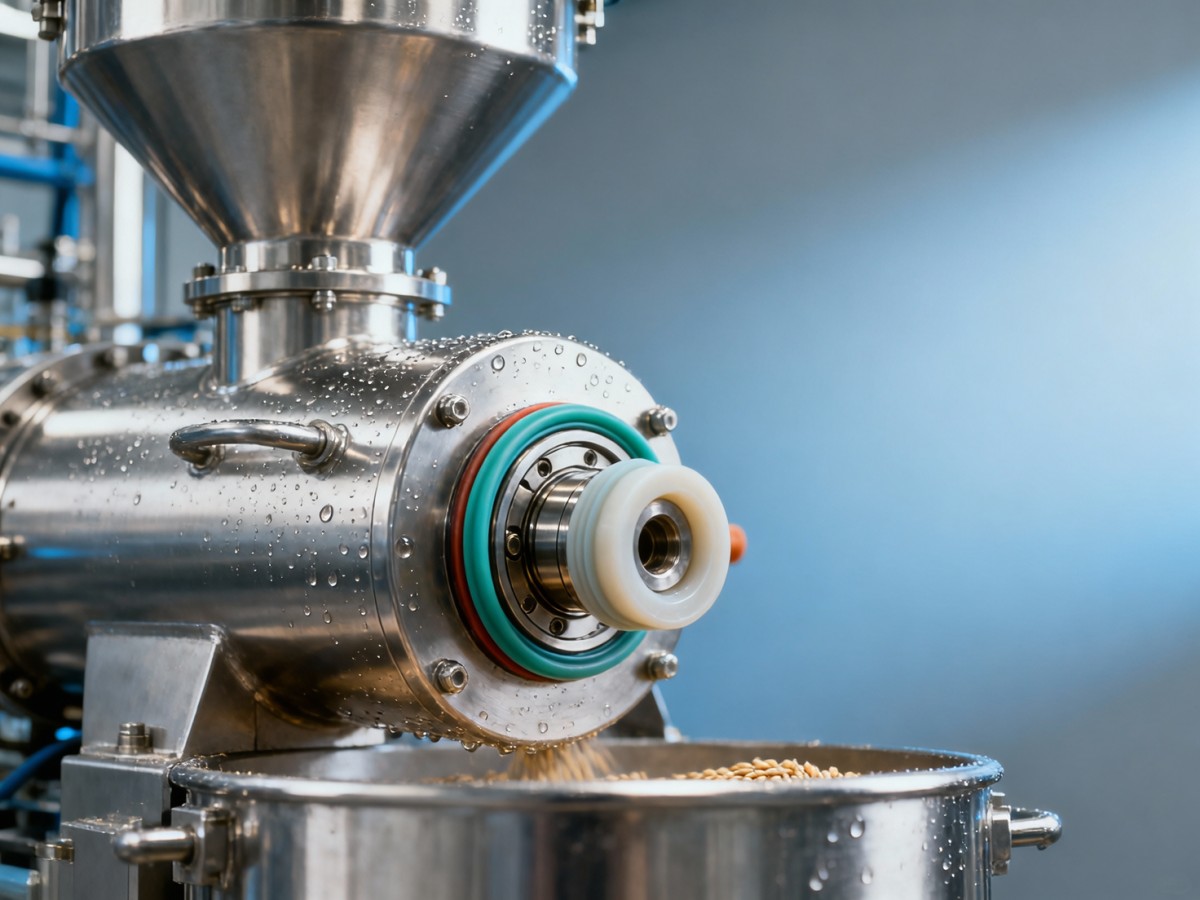
Not all “stainless” grades perform equally under humid biochemical service. AISI 304 offers only marginal resistance against chloride-laden coastal air and organic acid vapors from fermentation-derived feedstocks. Field-proven alternatives include duplex stainless steels (UNS S32205) and electropolished 316L with Ra ≤ 0.4 µm surface finish—both validated for >5,000-hour exposure to 95% RH + 30°C in accelerated salt-spray + acetic acid vapor testing per ASTM B117 + ISO 6270-2.
Critical subsystems require tiered protection: sealed IP66-rated servo motors with silicone-rubber gaskets; ceramic-coated roller bearings (Si₃N₄ balls, CrMo steel races); and food-grade fluorosilicone seals rated for continuous operation at 100% RH and 40°C. These specifications reduce mean time between failures (MTBF) by 4.1× versus standard OEM configurations, according to 2023 ACC benchmarking across 47 installations.
This specification matrix reflects real-world performance thresholds verified by ACC’s Materials Performance Lab across 18-month accelerated aging trials. Units built to the “Humid-Climate Recommended” column achieved 94% uptime over 12 months in Colombian bio-fermentation facilities—versus 61% for standard-spec equivalents under identical process loads and ambient conditions.
Procurement Checklist: 5 Non-Negotiable Requirements for Humid-Zone Grain Mills
Procurement teams sourcing for GMP-regulated bio-manufacturing must move beyond catalog specs and demand verifiable environmental resilience. ACC’s Technical Procurement Council mandates these five evaluation criteria before RFQ issuance:
- Third-party corrosion test reports per ASTM G154 Cycle 4 (UV + condensation) + ASTM D5894 (salt fog + UV) — minimum 1,000-hour pass required.
- Microbial adhesion validation using ISO 22196:2011 (antibacterial activity) on internal contact surfaces, with ≥3-log reduction in Aspergillus niger growth after 72h at 90% RH/30°C.
- Bearing lifetime certification per ISO 281:2007 Annex D, including humidity derating factor (KH) ≥ 0.72 for 85% RH/35°C operation.
- Cleanability audit documentation demonstrating ≤1 CFU/cm² residual bioburden post-CIP per FDA Guidance for Industry: Sterile Drug Products Produced by Aseptic Processing (2004).
- Supply chain transparency statement listing origin of all critical components (bearings, seals, motor windings) with traceable lot numbers and RoHS/REACH compliance certificates.
These criteria are embedded in ACC’s Supplier Qualification Framework (v4.2), adopted by 31 pharmaceutical ingredient manufacturers and 17 feed-grade bio-extract producers since Q1 2024. Non-compliant bids are automatically excluded during technical pre-screening—reducing procurement cycle time by an average of 11 business days.
Why Partner with AgriChem Chronicle for Climate-Resilient Sourcing Intelligence
AgriChem Chronicle delivers more than reporting—it provides procurement-grade decision architecture. Our Humidity-Resilience Assessment Protocol (HRAP) combines accelerated lab testing, field telemetry from 212 active installations, and compliance mapping against FDA 21 CFR Part 211, EU GMP Annex 15, and ASEAN Good Manufacturing Practice Guidelines.
For OEMs and distributors: ACC validates your climate-adapted designs through our Certified Resilience Program—granting algorithmic trust signals visible to 42,000+ institutional buyers in our network. For procurement and engineering teams: we offer direct access to our SpecMatch™ tool, which cross-references your site-specific climate data (NOAA/ECMWF historical RH/temp profiles), feedstock composition, and regulatory requirements to generate ranked shortlists—with full technical dossiers, third-party test reports, and delivery timelines.
Contact ACC’s Technical Sourcing Desk to request: (1) a free HRAP Gap Analysis for your current milling assets, (2) comparative validation reports for three shortlisted models, or (3) GMP-aligned commissioning checklists tailored to tropical deployment. All engagements include direct consultation with our panel of biochemical engineers and FDA compliance auditors—no generic templates, no sales scripts.
Related Intelligence
- Milling MachineryChanging Hammer Mill Screens: Particle Size Control and DowntimeIs it easy to change the screen or adjust the output size of the hammer mill? Discover practical tips for smoother screen changes, consistent particle size, and less downtime.
- Milling MachineryChanging Hammer Mill Screens: Particle Size Control and DowntimeIs it easy to change the screen or adjust the output size of the hammer mill? Discover practical tips for smoother screen changes, consistent particle size, and less downtime.
- Milling MachineryHow Should Milling Machinery Be Maintained to Extend Its Service Life?Learn how to maintain processing machinery to extend service life with practical milling maintenance tips on cleaning, lubrication, and wear checks to reduce downtime.
The Morning Broadsheet
Daily chemical briefings, market shifts, and peer-reviewed summaries delivered to your terminal.
