

The Authority in Global Agricultural Chemistry & Bio-Resources
Grain Conveyor Compliance: OSHA Requirements for Grain Handling Facilities
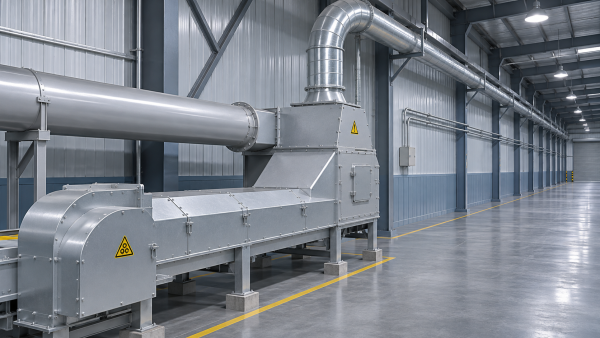
Grain conveyor compliance starts with a practical question: can anyone reach a moving or unexpectedly energized part while operating, cleaning or maintaining the equipment? A compliant program must address those hazards alongside combustible dust, grain engulfment and the possibility that a fault in one machine will affect equipment elsewhere in the conveying line.
For facilities covered by OSHA’s grain handling standard, the requirements extend beyond the conveyor itself to housekeeping, preventive maintenance, training and emergency planning. General industry rules on machine guarding, hazardous energy and electrical safety can also apply. The right assessment follows grain from receiving through conveying and storage, including the places workers enter only during a jam or breakdown.
Which OSHA requirements apply to a grain conveyor?
OSHA’s grain handling standard, 29 CFR 1910.272, applies to specified grain handling facilities, including grain elevators, feed mills, flour mills and certain other grain processing operations. It addresses hazards associated with grain handling equipment and facility operations; it is not a conveyor certification standard.
Other OSHA general industry requirements may apply alongside it. The most relevant include machine guarding under 29 CFR 1910.212, control of hazardous energy under 29 CFR 1910.147, and electrical requirements under Subpart S of Part 1910. Walking-working surface and respiratory protection requirements can also become relevant, depending on the task and exposure.
Coverage depends on the facility and work being performed. A conveyor handling grain does not automatically make every provision of the grain handling standard applicable to every location. Start by identifying the facility’s operations, the equipment involved and the tasks workers perform around it. Then assess each applicable requirement against conditions in the field.
Find the hazards along the entire conveying route
A conveyor may appear enclosed from the operating floor while exposing workers at a loading point, return run, drive assembly or maintenance opening. Follow the system from the receiving pit through each transfer point to its discharge. Include connected bucket elevators, distributors and equipment that can start as part of the same sequence.
Look at normal operation and at tasks that change the exposure: removing spilled grain, sampling, adjusting tracking, clearing a blockage and replacing components. Ask where hands, clothing or tools could reach moving parts, where grain can accumulate, and where a worker could be caught between equipment and a fixed structure.
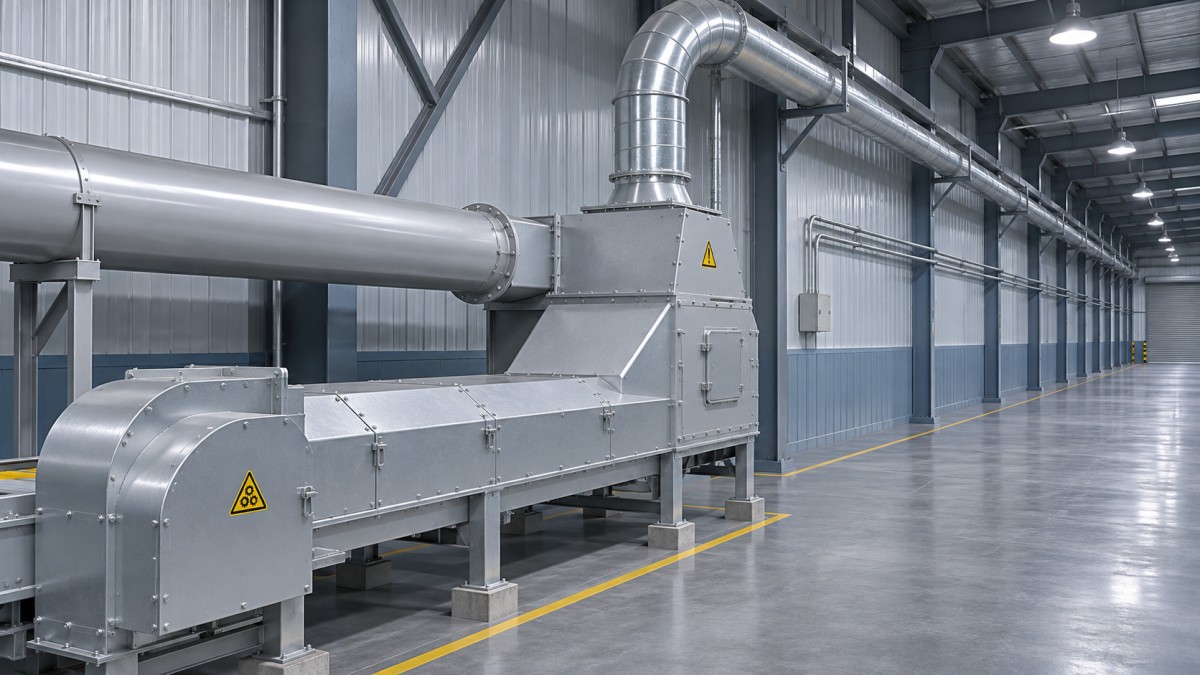
A walk-through should also cover areas above and below the conveyor. Dust on an overhead beam, grain trapped inside a housing or an inaccessible tail pulley can create hazards that are easy to miss from the main aisle. Record the location and condition of each issue so that maintenance can identify the affected equipment without guesswork.
Guard moving parts where workers can be exposed
Belts, chains, sprockets, shafts, couplings and pulleys can pull a hand or clothing into machinery in a fraction of a second. Screw conveyors present a similar danger at inlets, inspection openings and discharge points. Guarding must prevent employees from being exposed to hazards created by moving machine parts during the work they actually perform.
Check the effectiveness of a guard, not just its presence. A mesh cover may leave an opening large enough to reach a pinch point; a solid cover may have been removed to make frequent adjustments easier. Inspect access around the sides and ends, including areas reached from ladders, platforms or adjacent equipment.
Fixed guards are often suitable where access is infrequent. Where inspection or adjustment is routine, the design needs to allow that work safely without encouraging workers to defeat the protection. A warning label or emergency stop does not replace a guard that is needed to prevent contact.
After repairs, verify that guards and covers are securely reinstalled before the line returns to service. This check matters at transfer points, where one conveyor’s discharge can obscure the moving parts of another machine.
Lock out the whole system before clearing a jam
Blocked grain and misaligned belts often create pressure to intervene quickly. Yet a stopped conveyor is not necessarily isolated: it may restart automatically, receive a remote start command or move when stored energy is released.
Under OSHA’s lockout/tagout standard, servicing and maintenance covered by the rule require control of hazardous energy. A task-specific procedure should identify the equipment, energy sources and isolation points, as well as the steps for shutting down, isolating, securing and verifying the isolation. Electrical power is only one concern; gravity, tensioned components, pneumatic systems and material that can shift or fall may also require attention.
For a jam at a transfer point, identify every machine that could feed material into the work area or move the affected conveyor. Isolating only the nearest motor can leave an upstream conveyor or an automatic control sequence active. Workers must apply the required energy controls and verify isolation before entering the danger zone or reaching into the equipment.
Push buttons and selector switches are control devices, not substitutes for energy-isolating devices. If several employees or trades are involved, the procedure must protect each person for the duration of their exposure. Removing a guard to inspect or clear a blockage should trigger a careful assessment of the servicing task and the applicable energy-control requirements.
Control grain dust and ignition sources together
Grain dust can burn rapidly when dispersed in air and ignited. Conveyor transfer points, receiving pits, enclosed galleries and bucket elevators can produce or collect dust; overheated bearings, friction, misaligned belts, electrical equipment and hot work can introduce ignition sources.
For covered facilities, OSHA requires a written housekeeping program with specified priorities for dust removal. The grain handling standard also identifies priority housekeeping areas and conditions that require prompt action when fugitive dust accumulates. Treat those provisions as a starting point for the facility’s written program, rather than assuming a general cleaning schedule addresses every accumulation.
Inspect horizontal surfaces above equipment as well as floors. Cleaning methods matter: compressed air or blowing down dust can suspend settled material and create an explosive atmosphere. The grain handling standard restricts the use of compressed air for blowing dust from equipment, walls and other areas; it should not be treated as a routine shortcut.
Dust collection and containment help control releases, but they do not eliminate the need to inspect for deposits, damaged ductwork and equipment faults. Coordinate cleaning with production and maintenance so that work does not introduce an ignition source into a dusty area.
Use preventive maintenance to detect developing faults
A conveyor can run while a bearing overheats, a belt rubs against its housing or grain leaks from a transfer point. Those conditions can become safety problems before a complete mechanical failure occurs. OSHA’s grain handling standard requires preventive maintenance of certain mechanical and safety control equipment and prompt correction of specified hazardous conditions.
Build inspections around components whose condition can change between shutdowns: bearings, belt alignment, drive components, guards, dust collection equipment and safety devices. Look for unusual heat, noise, vibration, rubbing marks, damaged seals and recurring spillage. An inspection finding should lead to an assigned corrective action, an appropriate operating decision and a record of completion.
Bucket elevators deserve particular attention because they combine moving belts, enclosed dust and potential ignition sources. OSHA’s grain handling standard includes specific provisions for certain bucket elevators, including requirements related to monitoring devices and alignment, subject to the conditions and exceptions in the rule. A device is useful only if its alarm or shutdown function is maintained and workers know how to respond.
Inspection intervals should reflect the equipment, operating conditions and maintenance history while meeting applicable requirements. A conveyor that handles abrasive material, runs for long periods or repeatedly loses alignment may need closer attention than one with stable operating conditions.
Plan for entry, engulfment and emergency response
Conveyors connected to bins and silos can expose workers to hazards beyond the machinery itself. Flowing grain can engulf a person, while bridged grain or grain built up on a wall can collapse unexpectedly. Entering a bin to restore flow is a different task from servicing a conveyor outside it, even if both are prompted by the same blockage.
The grain handling standard contains specific requirements for entry into bins, silos and tanks, including controls for equipment that presents a danger, permits in certain circumstances, an observer and rescue arrangements. It also prohibits walking down grain to make it flow and restricts entry where built-up grain could fall and bury a worker. Atmospheric hazards may require additional precautions.
Emergency planning must be practical for the site. Workers need to know how to report an emergency, stop equipment and summon the designated response. Rescue arrangements should account for the access points, equipment and hazards involved; sending an unprepared coworker into a bin can create additional victims.
Turn the assessment into a working compliance program
A binder of procedures cannot show whether a conveyor is safe in daily use. Compare written requirements with the way work is performed, particularly on night shifts, during harvest peaks and when contractors are called in. Interview operators and maintenance workers about recurring jams, cleaning difficulties and guards that are routinely removed.
Use the findings to establish a short, traceable set of actions:
- Map the equipment: identify conveyors, connected machinery, isolation points, access openings and areas where dust collects.
- Check controls in place: inspect guarding, energy isolation arrangements, housekeeping conditions and maintenance records against the tasks performed.
- Prioritize exposure: address accessible moving parts, uncontrolled energy, serious dust accumulations and unsafe bin-entry conditions before equipment continues to expose workers.
- Assign and close actions: give each correction an owner and completion date, then verify the physical condition after the work is done.
- Review changes: update procedures and training when equipment, controls, materials or work practices change.
Training should match each employee’s duties, including the hazards associated with assigned work and the procedures they must follow. For contractors, communicate the facility’s relevant hazards and coordinate work before servicing begins. A useful final check is to choose one real task—such as clearing a transfer-point blockage—and follow it from shutdown through restart. If the written steps do not lead workers safely through that job, revise the procedure and the controls together.
Related Intelligence
- Grain Silos & StorageGrain Silo Comparison: Steel vs. Concrete for Long-Term StorageGrain silo comparison: Explore steel vs. concrete for long-term storage, from durability and moisture control to lifecycle costs and expansion.
- Grain Silos & StorageGrain Conveyor Compliance: OSHA Requirements for Grain Handling FacilitiesGrain conveyor compliance starts with safer operations. Explore OSHA requirements for guarding, lockout, dust control and maintenance in grain handling facilities.
- Grain Silos & StorageCoBank: Aging, Shrinking US Barge Fleet Threatens Grain ExportsUS barge fleet decline could threaten grain exports. Explore CoBank’s warning and what tighter freight capacity may mean for costs and farmers.
The Morning Broadsheet
Daily chemical briefings, market shifts, and peer-reviewed summaries delivered to your terminal.