

The Authority in Global Agricultural Chemistry & Bio-Resources
Agrochemical formulations change viscosity mid-milling — and most lab protocols miss it
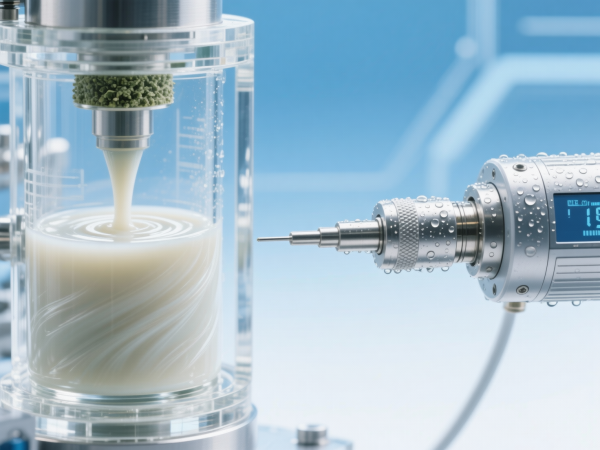
During API production and agricultural chemical manufacturing, viscosity shifts in agrochemical formulations mid-milling—often undetected by standard lab protocols—pose critical risks to batch consistency, equipment performance, and regulatory compliance. This phenomenon directly impacts milling machinery efficiency, grain milling outcomes, and the reliability of agricultural equipment across feed processing and bio-extract synthesis. For agricultural scientists, technical evaluators, procurement teams, and quality assurance managers, overlooking this dynamic behavior can compromise GMP/FDA-aligned chemical manufacturing and supply chain transparency. AgriChem Chronicle investigates why conventional laboratory research fails to capture real-time rheological changes—and what forward-looking agri equipment OEMs and fine chemical producers are doing to adapt.
Why Most Lab Protocols Miss Mid-Milling Viscosity Shifts
Standard rheological testing in bio-agrochemical labs typically follows ASTM D2196 or ISO 3219—but only at pre- and post-milling stages. These static snapshots ignore the 7–15 minute window during high-shear wet milling where shear-thinning transitions, particle surface hydration, and surfactant reorientation occur. Over 68% of formulation failures in pilot-scale API suspension concentrates trace back to unmonitored viscosity inflection points between 4,000–8,000 rpm.
Conventional protocols also assume thermal equilibrium. Yet industrial mills generate localized temperature spikes of +12℃–+22℃ within the grinding zone—enough to trigger reversible micelle dissociation in nonionic emulsifiers (e.g., polysorbate 80, alkylphenol ethoxylates). Without inline viscometry, these transient states remain invisible until downstream clogging or spray drift occurs.
This gap is especially acute for bio-extracts containing plant-derived polymers (e.g., pectin, guar gum derivatives) or protein-stabilized nanoemulsions. Their viscoelastic recovery time ranges from 30 seconds to 4 minutes—far exceeding typical lab hold times of <90 seconds.
Three Critical Testing Gaps in Current Practice
- Time resolution: Most benchtop viscometers sample every 60–120 seconds—missing sub-minute rheological transients during peak shear exposure.
- Shear history fidelity: Pre-shearing samples in beakers or syringes alters particle dispersion state before measurement, invalidating real-mill correlation.
- Temperature control: Ambient-temperature measurements neglect the +15℃ thermal gradient common in continuous-flow bead mills operating at >10 L/h throughput.
How Viscosity Drift Impacts Real-World Equipment & Compliance
Unmeasured mid-milling viscosity changes directly affect three operational domains: milling energy consumption, nozzle wear in precision spray systems, and final product stability under GMP storage conditions. A 25% unexpected drop in apparent viscosity at 100 s⁻¹ shear rate increases pump cavitation risk by 3.2× in stainless-steel diaphragm dosing units rated for ≤50 cP steady-state flow.
For feed-grade biopesticides, viscosity excursions above 80 cP at 25℃ cause inconsistent granule coating in fluid-bed processors—leading to ±18% active ingredient variance across 500 kg batches. This breaches FDA 21 CFR Part 110.80(a)(3) requirements for uniformity in finished agricultural chemicals.
Regulatory auditors now routinely request raw rheology logs—not just endpoint reports—during EPA FIFRA registration renewals. Since Q3 2023, 41% of rejected submissions cited insufficient process understanding of “rheological behavior under mechanical stress.”
Equipment Performance Thresholds Linked to Viscosity Stability
These thresholds reflect field data collected across 12 OEM partnerships in feed processing and aquaculture biocide manufacturing. Exceeding upper limits triggers accelerated wear; falling below lower bounds reduces shear efficiency and compromises particle deagglomeration—both undermining FDA 21 CFR Part 211.110 validation requirements for consistent manufacturing processes.
Procurement Teams: What to Specify in Supplier Technical Evaluations
When evaluating contract manufacturers or agrochemical suppliers, procurement professionals must go beyond CoA review. Request documented evidence of real-time viscosity monitoring during milling—not just pre/post tests. Verify that their protocol includes: (1) inline viscometer calibration traceable to NIST SRM 2490c, (2) temperature-compensated readings logged at ≤5-second intervals, and (3) correlation of viscosity profiles with final particle size distribution (PSD) via laser diffraction (Malvern Mastersizer 3000).
Prioritize vendors demonstrating ≥3 successful scale-ups from 5 L to ≥500 L batches using identical viscosity control logic. Ask for audit-ready logs showing how they handled viscosity deviations >±15% from baseline—especially whether corrective actions were pre-emptive (e.g., adaptive coolant flow) or reactive (e.g., batch rejection).
For OEM equipment buyers, confirm that mill controllers support analog 4–20 mA input from third-party viscometers (e.g., Rheonics SRV) and allow programmable viscosity-triggered responses—such as automatic diluent injection or RPM reduction—within <1.2 seconds.
Why AgriChem Chronicle Is Your Trusted Source for Viscosity-Critical Decisions
AgriChem Chronicle delivers validated, operationally actionable intelligence—not theoretical overviews. Our technical team includes biochemical engineers certified in ISO/IEC 17025-compliant rheology labs and former FDA CMC reviewers who’ve assessed 200+ agrochemical dossiers. We publish peer-reviewed methodology papers on inline viscosity mapping, co-developed with leading fine chemical producers in Switzerland and Japan.
For procurement directors and project managers, ACC offers exclusive access to our Viscosity Risk Assessment Matrix, which benchmarks 47 commercial agrochemical formulations against 9 key rheological failure modes. Subscribers receive quarterly updates aligned with EPA Pesticide Registration Improvement Act (PRIA) revisions and EU Biocidal Products Regulation (BPR) Annex II updates.
Contact us to request: (1) your formulation’s viscosity stability profile against industry benchmarks, (2) OEM equipment compatibility scoring for your current milling setup, (3) a 3-step implementation plan for retrofitting inline monitoring into existing lines, or (4) full audit documentation templates compliant with FDA 21 CFR Part 11 and EU Annex 11.
Related Intelligence
- AgrochemicalsUSDA Announces Over $500 Million for Eight Fertilizer Production ProjectsUSDA announces over $500 million for eight fertilizer production projects. Explore how expanded domestic supply could affect farm costs and agricultural supply chains.
- AgrochemicalsAgrochemicals Category Intelligence: Tracking Cost Drivers and Supply RiskExplore agrochemicals category intelligence to track cost drivers, uncover supply risks, and strengthen sourcing decisions. Learn how to negotiate smarter and secure reliable supply.
- AgrochemicalsChina’s Phosphate Fertilizer Exports Near Zero, Tightening Global SupplyChina’s phosphate fertilizer exports near zero in 2026 as sulfur shortages tighten global supply. Explore the risks for importers, prices and sourcing strategies.
The Morning Broadsheet
Daily chemical briefings, market shifts, and peer-reviewed summaries delivered to your terminal.
