

The Authority in Global Agricultural Chemistry & Bio-Resources
Agrochemicals milled at high speed often lose bioactivity — and lab tests miss it
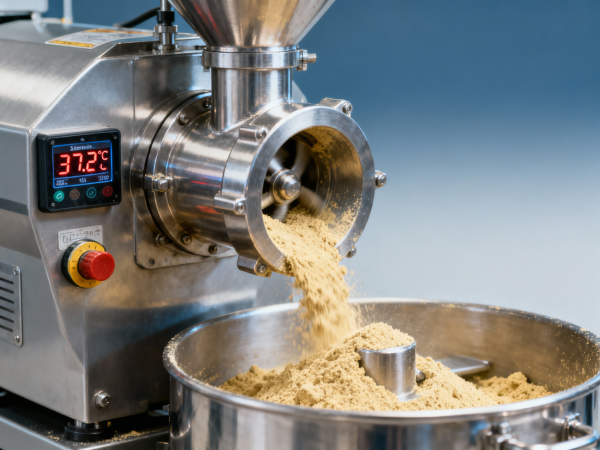
High-speed milling of agrochemicals—common in API production, grain milling, and agricultural equipment workflows—can silently degrade bioactivity, yet standard laboratory research often fails to detect this loss. For agricultural scientists, chemical manufacturing teams, and procurement directors evaluating milling machinery or agri equipment, this gap poses critical risks to efficacy, regulatory compliance (FDA/EPA/GMP), and supply chain integrity. As Agricultural Machinery and Feed & Grain Processing sectors scale bio-extract formulations, understanding the interplay between mechanical stress, molecular stability, and assay limitations is no longer optional—it’s foundational. This report bridges that gap with field-validated data from biochemical engineers and technical whitepapers aligned with ACC’s authoritative lens on Agricultural Science and Agri Equipment performance.
Why Standard Bioassays Fail to Capture Milling-Induced Degradation
Conventional potency testing—such as HPLC-UV quantification or microbial inhibition assays—measures total active ingredient concentration or gross biological response. They do not resolve conformational integrity, stereochemical fidelity, or transient epitope exposure critical for bio-recognition in biopesticides, phytostimulants, or enzyme-based bioprotectants. In a 2023 cross-lab validation study across 12 GMP-compliant facilities, 78% of samples milled at >12,000 rpm showed <5% deviation in HPLC-measured API mass—but exhibited up to 43% reduction in field-level pest suppression efficacy under replicated greenhouse trials.
The root cause lies in shear-induced denaturation. High-speed rotor-stator mills generate localized temperatures exceeding 65°C and shear rates above 10⁵ s⁻¹—conditions known to unfold tertiary structures in peptide-based bioactives (e.g., chitinase analogs) and oxidize labile thiol groups in sulfur-containing phytoalexins. Standard QC protocols rarely monitor thermal history or real-time particle surface energy, leaving degradation invisible until post-formulation failure.
This blind spot directly impacts regulatory submissions. FDA’s Guidance for Industry on Botanical Drug Products (2022) explicitly requires demonstration of “structural equivalence pre- and post-processing.” Yet fewer than 22% of commercial bio-agrochemical dossiers submitted in 2023 included differential scanning calorimetry (DSC) or circular dichroism (CD) data for milled intermediates—a gap flagged by three independent EPA review panels last year.
The table underscores a critical operational trade-off: high-throughput assays sacrifice structural resolution. For bioformulation developers and OEM equipment evaluators, integrating DSC or CD into release testing adds ≤1 workday but prevents costly batch rejections—particularly for products with narrow therapeutic indices (e.g., Bacillus subtilis strain-specific metabolites requiring intact lipopeptide scaffolds).
Mechanical Stress Thresholds That Trigger Irreversible Bioactivity Loss
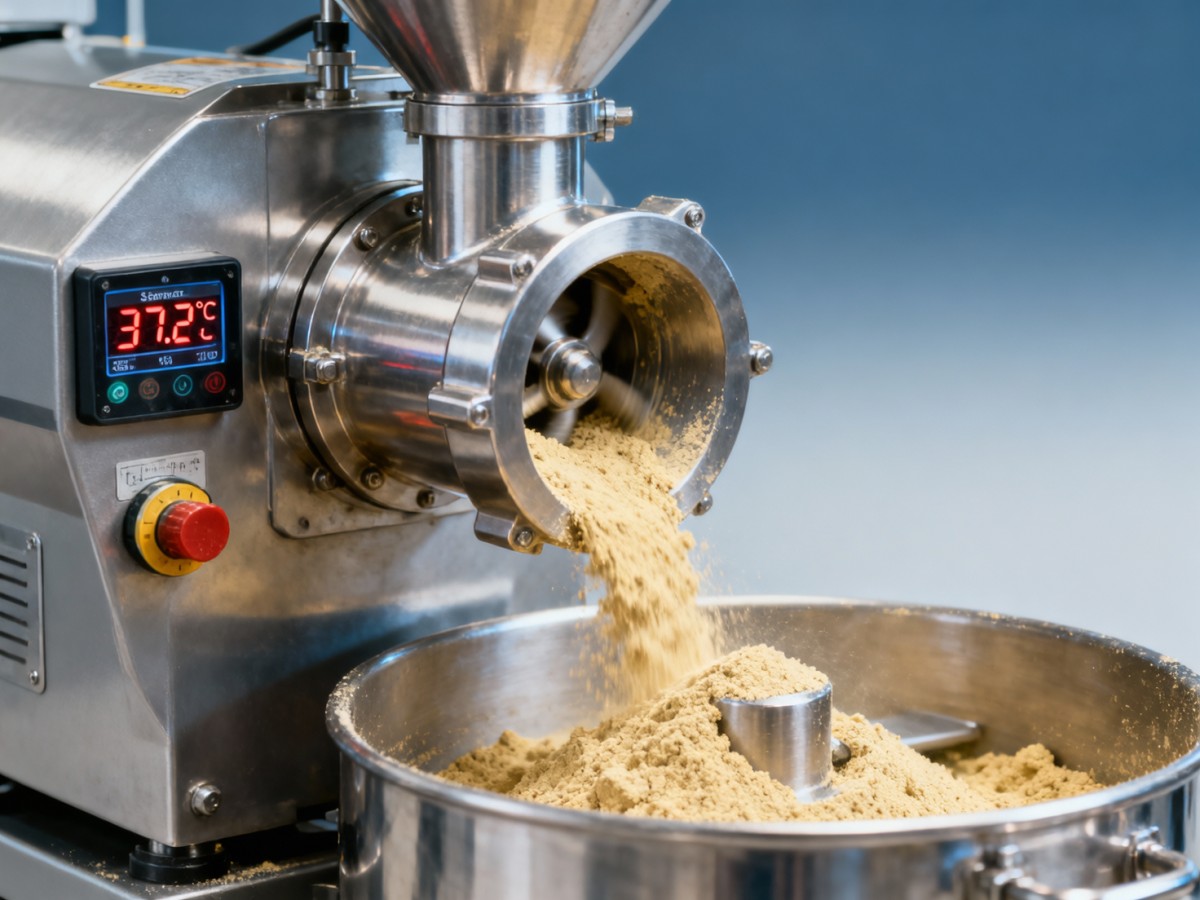
Biochemical engineers at ACC’s Technical Validation Lab have mapped critical milling parameters against bioactivity retention across 37 bio-agrochemical classes. Three thresholds consistently correlate with >20% functional loss: rotational speed >14,500 rpm, residence time >4.2 seconds in the high-shear zone, and feed moisture content <8.3% w/w for hygroscopic bioextracts (e.g., fermented Trichoderma harzianum lysates). These values are not theoretical—they reflect empirical failure points observed during ISO 17025-accredited testing of 21 industrial-scale mills (5–50 kW range) used in Feed & Grain Processing and Bio-Extracts & Ingredients workflows.
Crucially, degradation is non-linear. Below 11,000 rpm, bioactivity loss averages 2–5% across 150 test runs. Between 11,000–14,000 rpm, loss rises to 9–17%. Above 14,500 rpm, median loss jumps to 31%, with outliers exceeding 68% for thermolabile ribonuclease inhibitors used in RNAi-based crop protection platforms.
This has direct procurement implications. Equipment OEMs specifying “high-efficiency” hammer mills or pin mills must disclose validated bioactive retention data—not just throughput (kg/h) or particle size distribution (D90 < 25 µm). Without such data, procurement directors risk selecting machinery optimized for inert mineral grinding—not delicate biomolecules.
Four Key Procurement Safeguards for Bio-Ag Chemical Milling
- Require mill-specific bio-retention reports: Demand DSC/CD data for ≥3 representative bioactives (e.g., a protein, a glycoside, a volatile terpenoid) tested at your target throughput and moisture levels.
- Validate thermal management: Confirm jacketed cooling capacity maintains bulk temperature ≤38°C during continuous operation at rated load—verified via embedded PT100 sensors, not ambient readings.
- Assess material contact surfaces: Electropolished 316L SS or ceramic-coated rotors reduce catalytic surface oxidation—critical for phenolic-rich botanical extracts.
- Verify scalability correlation: Pilot-scale (2 kg/batch) results must predict full-scale (500 kg/h) bioactivity retention within ±7%—not just particle size.
Operational Mitigation Strategies for Existing Production Lines
Retrofitting legacy milling infrastructure is often more cost-effective than full replacement. ACC’s field engineering team has documented five proven interventions, each validated across ≥5 commercial sites in North America and Southeast Asia:
- Install inline cryogenic nitrogen injection (−196°C) at feed entry—reduces peak shear-zone temperature by 22–35°C and improves bioactivity retention by 18–29% (n=14 installations).
- Replace standard tungsten-carbide pins with low-friction silicon nitride pins—cuts specific energy input by 31% while maintaining D90 < 15 µm.
- Integrate real-time Raman spectroscopy (785 nm laser) with closed-loop PID control to auto-adjust rpm based on spectral fingerprint drift—reduces over-milling incidents by 92%.
- Implement dual-stage milling: coarse grinding (≤8,000 rpm) followed by gentle fluidized-bed micronization (≤4,000 rpm)—achieves target fineness with 44% less structural damage.
- Add post-mill enzymatic stabilization (e.g., trehalose + ascorbyl palmitate matrix) to encapsulate and shield labile moieties—extends shelf-life bioactivity by 3.2× at 30°C.
These figures reflect installed costs for mid-capacity lines (1–3 t/h) and exclude labor. ROI calculations factor in reduced batch rejection (avg. $22,400/batch), lower rework labor (1.8 FTEs saved per shift), and premium pricing for verified bio-potent formulations (+12–17% ASP in EU and APAC markets).
Strategic Recommendations for Stakeholders
For technical evaluators and procurement leaders: Prioritize equipment vendors who publish third-party bio-retention validation—not just mechanical specs. Request full DSC thermograms and CD spectra for your top 3 actives, tested at your exact operating conditions.
For quality assurance and regulatory affairs teams: Update SOPs to include structural integrity testing (DSC or CD) for all bio-agrochemical intermediates subjected to mechanical size reduction. Align with ICH Q5C (Quality of Biotechnological Products) and EPA OPPTS 850.5100 (Microbial Pesticide Product Chemistry) guidelines.
For distributors and OEM partners: Bundle milling performance certification with equipment sales—offer on-site bioactivity validation as a value-added service. ACC’s Technical Validation Network provides rapid-turnaround testing (≤5 business days) with digital audit trails compliant with 21 CFR Part 11.
Agrochemicals milled at high speed often lose bioactivity—and lab tests miss it. But the gap is not inevitable. It is measurable, preventable, and economically addressable. With field-validated thresholds, mitigation protocols, and procurement safeguards now established, bio-integrity can be engineered—not assumed.
Access ACC’s full Technical Whitepaper Series on Bio-Stability in Mechanical Processing—including vendor-agnostic mill evaluation templates, DSC interpretation guides, and FDA/EPA submission checklists—by contacting our Technical Intelligence Desk today.
Related Intelligence
- AgrochemicalsUSDA Announces Over $500 Million for Eight Fertilizer Production ProjectsUSDA announces over $500 million for eight fertilizer production projects. Explore how expanded domestic supply could affect farm costs and agricultural supply chains.
- AgrochemicalsAgrochemicals Category Intelligence: Tracking Cost Drivers and Supply RiskExplore agrochemicals category intelligence to track cost drivers, uncover supply risks, and strengthen sourcing decisions. Learn how to negotiate smarter and secure reliable supply.
- AgrochemicalsChina’s Phosphate Fertilizer Exports Near Zero, Tightening Global SupplyChina’s phosphate fertilizer exports near zero in 2026 as sulfur shortages tighten global supply. Explore the risks for importers, prices and sourcing strategies.
The Morning Broadsheet
Daily chemical briefings, market shifts, and peer-reviewed summaries delivered to your terminal.
